Keeping the fuel tank breather open
Do we agree, we generally keep the breather open except for a few specific situations.
1 Carrying the tank.
2 Excessive healing
3 Using the bar-b-q or cooking in an inclosed space
Alway use fuel free from Ethanol
Ethanol attracts water and attacks fibreglass/plastic lines and tanks, both of which cause problems for your carburettor and engine.
Only number 1 for me.
For 2 if my boat was heeling that much I'd have bigger issues than a few drops of fuel!
As for 3. Fuel and vapours are a funny thing. As a bored kid and experimenting we found its not actually that easy to ignite many accelerants as easily as the safety authorities would have people believe. That being said Murphy has an uncanny ability to ruin some people's day. So I guess it would be a sensible thing to do but I suspect the bigger issue would be forgetting that it's closed and having the engine start easily but then stalling when you need it the most .
As for ethanol it is hygroscopic. So definitely not appropriate for a boat.
Select to expand quoteBundeenabuoy said..
Alway use fuel free from Ethanol
Ethanol attracts water and attacks fibreglass/plastic lines and tanks, both of which cause problems for your carburettor and engine.
I doubt whether ethanol attacks plastic tanks and rubber hoses. I have run ethanol in my car with a plastic tank for 22 years so far. Why would people sell non ethanol rubber fuel lines!
Select to expand quoteRamona said..Bundeenabuoy said..
Alway use fuel free from Ethanol
Ethanol attracts water and attacks fibreglass/plastic lines and tanks, both of which cause problems for your carburettor and engine.
I doubt whether ethanol attacks plastic tanks and rubber hoses. I have run ethanol in my car with a plastic tank for 22 years so far. Why would people sell non ethanol rubber fuel lines!
Hi Romona,
I always value your comments, and this is a learning process for me.
Select to expand quoteRamona said..Bundeenabuoy said..
Alway use fuel free from Ethanol
Ethanol attracts water and attacks fibreglass/plastic lines and tanks, both of which cause problems for your carburettor and engine.
I doubt whether ethanol attacks plastic tanks and rubber hoses. I have run ethanol in my car with a plastic tank for 22 years so far. Why would people sell non ethanol rubber fuel lines!
Hi Romona,
I always value your comments, and this is a learning process for me.
In NSW if petrol has 10% of ethanol it has to be sold as E10 fuel by law. If it has less than 10% it is sold as 91 and you don't know how much ethanol is in that fuel. Ethanol is cheaper than petrol so how much ethanol do you think is in that 91 your buying? Fuel companies are not really interested in making money so they are probably not diluting 91 with ethanol.
You can buy test kits on eBay for checking ethanol percentages. Meant for checking E85 but I'm sure it would handle other ratios.
Select to expand quoteBundeenabuoy said..
Maybe the fuel lines in cars do not have the plastic insert in them, that the tank to engine connecting line has.
I found orange goo in an old Mariner carburettor when I last pulled it apart.
My race car runs on E85 exclusively. That's 85% ethanol. Tank is alloy, lines are copper and rubber and there are various bits of plastic in the fuel pumps etc. Have bottles of water/methanol in plastic bottles stored for the water meth injection system. Methanol is much more aggressive than ethanol. The orange goo in your carburetor is most likely crappy two stroke oil. Ethanol has been in use world wide for a long time. No manufacturer is going to sell stuff that is not compatible.
Without comprehensively researching the topic, suffice to say there are many different types of plastic with vastly different properties. There are certainly several types in common use that are attacked by ethanol and other volatile liquids.
So it's risky to conclude anything about a particular plastic without identifying what type it is.
Eg.
My brother was driven crazy by repeated failures of his new 3.5 Hp Mercury outboard, the cause of which was never identified by the seller of the outboard who was a Mercury agent. They would strip down and clean the carby, accuse him of using contaminated fuel and refuse him a warranty claim.
Turned out the plastic fuel cap was being progressively attacked by the non ethanol fuel, which resulted in minute black particles accumulating in the carby, eventually blocking it.
en.m.wikipedia.org/wiki/Plastic#Types
regards,
Allan
Select to expand quoteRamona said..
In NSW if petrol has 10% of ethanol it has to be sold as E10 fuel by law. If it has less than 10% it is sold as 91 and you don't know how much ethanol is in that fuel. Ethanol is cheaper than petrol so how much ethanol do you think is in that 91 your buying? Fuel companies are not really interested in making money so they are probably not diluting 91 with ethanol.
You can buy test kits on eBay for checking ethanol percentages. Meant for checking E85 but I'm sure it would handle other ratios.
This article was published by Hunts marine.
SHARE
Ethanol blends and Boating
Ethanol Blends and Boating - Do they Mix? Did you know that running your outboard or sterndrive on ethanol blended petrol (E10) can cause performance problems and permanent damage to your motor, fuel tank and fuel lines. Why does ethanol pose a problem for marine engines? The answer lies in the properties of ethanol. Ethanol is hygroscopic, meaning it will absorb large amounts of water. Ethanol-blended fuels are also prone to phase separation. This means that over time the weight of the ethanol, along with any water it has absorbed, will separate and sink to the bottom of the fuel tank. Phase separation begins to occur in as little as 2 weeks. These attributes are less problematic for your car. It usually operates away from water and its fuel is replaced every week or two. But boat engines operate in a water environment and are often used infrequently. A water/ethanol mixture that has sunk to the bottom of your tank will get picked up by the motor's fuel system. Even small amounts of water can harm the fuel system and cause premature rusting. Phase separation also leaves a lower octane fuel on top. This separated fuel causes performance issues such as increased stalling, misfire, hesitation and difficulty maintaining speed while trolling. Ethanol is also a highly effective cleansing agent, solvent and antifreeze. Excess ethanol can break down solid material including rubber seals, plastic, fibreglass and even aluminium and steel. It mobilizes deposits including corrosive matter, varnish and rust which will travel through the engine and clog fuel filters, carburetor jets and injectors. High concentrations will clean the oil right off the internal components of a 2 stroke, making extra lubrication necessary to avoid premature wear. It can also contaminate fuel through deterioration of the tank surface, especially if the tank is older and made of fiberglass.
Select to expand quoteThis article is titled 'F*ck Ethanol.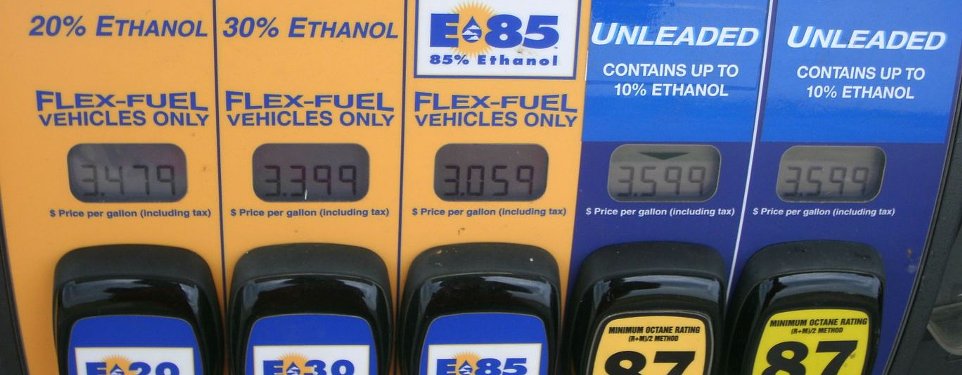
F@ck ethanol: The rant
Lemmy
Jul 30, 2015
115Comments
I know, I know, I lobbed a Molotov cocktail with the title. But ethanol really sucks.
To learn more about the basics of ethanol, see "Why is there ethanol in my gas?"I've had it with ethanol-laced gas. I'm sick of what it does to motorcycles. I'm not going to get into the political or environmental ramifications of using or not using it. That's beyond the scope of this article and not germane to my most favoritest of topics, which is motorcycles. Instead, I want to present every mechanical reason I know why you should write your state legislators and members of Congress and politely request that the government extricate itself from our gas tanks.Ethanol fuel in the United States is a blended fuel. What this means is that when you buy a gallon of gasoline, you're actually buying about nine tenths of a gallon of gas and one tenth of a gallon of ethanol, according to the scoundrels at the Energy Information Administration. Now, normally I love ethanol. It's great stuff for rotting your liver and helping one make questionable decisions with respect to smooching. As a fuel additive, however, I detest it. %2CformatThat used to be a fuel tank liner. Photo by Tom Cotten.In my college days, I pulled plenty of old bikes out of Missouri barns and fired them up on whatever gas sloshed around in them. Ah, the good old days. When men were men and gas didn't have water in it.From a business standpoint, ethanol is great stuff for those of us in the motorcycle repair biz. I've put more money in my pocket from rebuilding carburetors than nearly all my other work combined. I remember when ethanol-free gas was not nearly so difficult to locate, and these problems seemed to be much fewer and farther between. Storing a bike was really the only time fuel could go bad.That's not the case today. Gas goes bad in a matter of weeks, not years. I needed some science to make this article sound legit, so I interviewed a chemical engineer. My source wished to remain anonymous, due to a conflict of interest with his employer. He had quite a bit to say that supported my ethanol-sourced rage."Ethanol acts as an emulsifier," he explained. "Ethanol, being hydrophilic, permits water and fuel to blend together, which they ordinarily will not do. Ethanol's water-loving nature means it also has the nasty side effect of corroding the vessel it's contained in, like a fuel tank or carburetor body. In addition, pulling in water dilutes the fuel and lowers the BTU content of the fuel. This is why many older motorcycles need larger pilot jets, even when stock, to run correctly."Did I mention this chemical engineer also has a garage full of motorcycles? Because he does.
 %2CformatAll the green corrosion you see on this float needle is courtesy of the moisture that gets into your fuel system because of ethanol. Photo by Tom Cotten.Emulsifications have this nasty habit of pulling apart. Have you ever made - and broken - a hollandaise sauce? The same thing happens with ethanol. The ethanol-and-water mix eventually settles to the bottom of the tank. This process accelerates when the mixture is not agitated. (That's a fancy way of saying "not shaken or disturbed.") Imagine, say, an old bike parked in a barn, now with a layer of water underneath the gas, rusting the snot out of the tank. It makes me angry just thinking about it, because this is all avoidable.Tom Cotten, proprietor of Liberty Motorcycle Specialties, has another viewpoint on ethanol."I love bad gas!" Tom says. "The worse the gas, the better for my business."The replacement floats Tom makes for Linkert carburetors have become the favored option for antique bike owners."The whole problem with ethanol is how it reacts with the other 149 mandated additives in U.S. fuels, such as injector cleaners, intake valve deposit inhibitors as well as their effect when brands are mixed," Tom said.
 %2CformatTom is unable to identify this deposit. The entire contents of that bottle were found in one single carburetor, and are not the product of any of the fuel system components. Tom thinks this is the chemical product of some of the other additives that are a part of modern gasoline. Photo by Tom Cotten.I might add that there are also proprietary additives to fuel which make the goo that much more complicated. Tom feels that there was also some change to the fuel mixtures around 2006, or so. Apparently, that was a particularly dark time for the carburetor parts in the antique machines he is intimately familiar with."I'm wishing things would get back to as bad as 2006, when gas ate powdercoating, and seasoned tank liners turned to pork liver. The ethanol content in the fuel was the same, but I still wonder what changed," he said with a laugh.I'm not saying ethanol should be outlawed. I'd just like the opportunity to buy my dino juice old-timey and unaltered. Ethanol is making my life inconvenient and expensive, and that's not just an allusion to my mounting bar tabs. All joking aside, ethanol fuel just presents a list of problems that are very, very real: Reduced fuel mileage, increased potential for corrosion damage, no-start situations, and - if the government gets its way and E15 (gasoline with 15 percent ethanol) becomes widely available - a severely elevated possibility of having to drain and refill your fuel tank due to mis-blended fuel.**** ethanol.
Cleanliness when adding petrol and oil to the fuel container/engine.
I emptied three of my fuel containers this week and found a number of fine particles in each one of them.
When filling the fuel container it is not easy to balance the spout without it falling over and collecting particles.
Make sure to wipe clean the top of the fuel container before you pour the fuel into the engine.
Never pour until the fuel container is completely empty.
Washing out the inside of the fuel container with metho will clean it and also remove particles.
Select to expand quoteRamona said..Bundeenabuoy said..
Alway use fuel free from Ethanol
Ethanol attracts water and attacks fibreglass/plastic lines and tanks, both of which cause problems for your carburettor and engine.
I doubt whether ethanol attacks plastic tanks and rubber hoses. I have run ethanol in my car with a plastic tank for 22 years so far. Why would people sell non ethanol rubber fuel lines!
I work in the fuel industry and I would never use ethanol
Select to expand quoteBananabender said..
"Never pour until the fuel container is completely empty."
???
Because the particles are heavier and are last to leave the container
Select to expand quoteBundeenabuoy said..
Keeping the fuel tank breather open
Do we agree, we generally keep the breather open except for a few specific situations.
1 Carrying the tank.
2 Excessive healing
3 Using the bar-b-q or cooking in an inclosed space
I always close breather when boat not in use on remote tank and on outboard if left in weather ,which is always.
Select to expand quoteBananabender said..Bundeenabuoy said..
Keeping the fuel tank breather open
Do we agree, we generally keep the breather open except for a few specific situations.
1 Carrying the tank.
2 Excessive healing
3 Using the bar-b-q or cooking in an inclosed space
I always close breather when boat not in use on remote tank and on outboard if left in weather ,which is always.

I just emptied my two stroke 4 HP Tohasu after 30 hours use and washed out with metho
I have played enough today and had better do some work.
Asap I will pull the carb apart and post pictures.
Select to expand quoteBundeenabuoy said..Bananabender said..Bundeenabuoy said..
Keeping the fuel tank breather open
Do we agree, we generally keep the breather open except for a few specific situations.
1 Carrying the tank.
2 Excessive healing
3 Using the bar-b-q or cooking in an inclosed space
I always close breather when boat not in use on remote tank and on outboard if left in weather ,which is always.
I just emptied my two stroke 4 HP Tohasu after 30 hours use and washed out with metho
I have played enough today and had better do some work.
Asap I will pull the carb apart and post pictures.
Hi all,
I pulled the carburettor apart yesterday and got such a surprise.
It looked like new.
The needles can go in either way so have learnt to be extra careful with them.
The fine tuning requires you to get the idling right and then adjust the petrol mix.
Taking photos of each step might help a first timer but I figured it out in the end.
Very satisfying.
Sorry no photos this time.