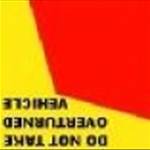
I'm reconditioning the windows on my Cavalier 28 with the aim of slowing the accumulation of rainwater in the bilge after wet weather. Each window has an external aluminium frame containing the glass, and a simpler internal aluminium frame. Both were painted satin black, and needed considerable wire-brush cleaning to remove the accumulation of gunk and goo that had been applied to try to stop previous leaks.
The fellow at the Big Green Shed recommended spray cans of Dulux Metal Shield Etch Primer (grey) and Dulux Metal Shield Epoxy Enamel (satin black). However, I'm finding it difficult to get a good finish.
I took the windows home to work on them in the garage. I did not clean off every spot of paint from the aluminium, thinking that if it survived a wire-brush clean and sanding, it had probably bonded to the aluminium well enough to form a good base for the new paint. However, the primer still delaminated sections of old paint, which meant more cleaning and re-application of primer. The enamel goes on to the primer OK, but I'm getting some pock-marks (where the primer was too thin?), it takes several hours to set, and when it does, it scratches easily.
This has taken several weeks, part time (no painting in the evenings because of the smell). I've got to get the windows back on the boat, else I can't go sailing, so will probably settle for what I've got.
However, I'm not impressed with my efforts, or the final finish. If I were to do it again, or to paint other aluminium bits and pieces, what would you recommend?


Think you are being a tad harsh on your efforts. Probably brush on etch primer and topcoats would be a lot better, resulting in a lot higher % of solids than the spray cans hence resulting in a harder finish and less orange peel effect. Use a good brush and very steady brushing. All the paint should have been taken back to the bare aluminium otherwise the etch primer reacts with it as you found, and the correct cleaner used after all sanding was done and before the etch primer was applied. Assume after wire brushing suitable sanding was done with alum oxide papers of fine enough grade. Note that these paint systems take 3+ days to gain fully hardness.
I have used International etch primer ( 2 pack) and then their 2 pack polyurethane on numerous spars with great success. The primer is very thin - specific gravity of water - and I always use 2 coats. It doesn't need to be sanded.
international-yachtpaint.com/en/au/boat-paint-products/primers/etch-primer
international-yachtpaint.com/s3/documents/TDS/Etch_Primer_AP_eng_A4_20190125.pdf
Have also used Norglass the below etch primer also - it is probably more cost effective and results in a thicker per coat application. Not sure why they call it norust when it is suitable for aluminium as well as the other metals nominated - nocorrosion would be far more logical.
www.norglass.com.au/products/norust-all-surface-primer
Select to expand quoter13 said..
Think you are being a tad harsh on your efforts. Probably brush on etch primer and topcoats would be a lot better, resulting in a lot higher % of solids than the spray cans hence resulting in a harder finish and less orange peel effect. Use a good brush and very steady brushing. All the paint should have been taken back to the bare aluminium otherwise the etch primer reacts with it as you found, and the correct cleaner used after all sanding was done and before the etch primer was applied. Assume after wire brushing suitable sanding was done with alum oxide papers of fine enough grade. Note that these paint systems take 3+ days to gain fully hardness.
I have used International etch primer ( 2 pack) and then their 2 pack polyurethane on numerous spars with great success. The primer is very thin - specific gravity of water - and I always use 2 coats. It doesn't need to be sanded.
international-yachtpaint.com/en/au/boat-paint-products/primers/etch-primer
international-yachtpaint.com/s3/documents/TDS/Etch_Primer_AP_eng_A4_20190125.pdf
Have also used Norglass the below etch primer also - it is probably more cost effective and results in a thicker per coat application. Not sure why they call it norust when it is suitable for aluminium as well as the other metals nominated - nocorrosion would be far more logical.
www.norglass.com.au/products/norust-all-surface-primer
Everything said here^^^^ with the addition of pay attention to the climate youre doing the painting in. cold temperatures and humidity can really affect paint/coating whilst it's drying. Not to say you didn't, but its something to keep in mind.
I'd settle for a hammertone finish in the silver or whichever.. hides flaws in the substrate material & from a distance looks like metal.
Jeff.
Select to expand quoter13 said..
Have also used Norglass the below etch primer also - it is probably more cost effective and results in a thicker per coat application. Not sure why they call it norust when it is suitable for aluminium as well as the other metals nominated - nocorrosion would be far more logical.
www.norglass.com.au/products/norust-all-surface-primer
I have used a fair bit of the Norglass norust.
A single pack product when thinned it sprays beautifully but be sure to allow more than adequate time ( according to atmospheric conditions) for solvents to flash off before top coating especially if you use a 2pk top coat.
Also it says on the can " Suitable for all areas other than those of continuous immersion." Due to my experiences with this primer, this means any area that is subject to constant moisture even though it may not be submerged , for example an area that may be subject to a trickle of water day in day out.
The primer seems to provide excellent protection for aluminum.
The ALDI metal paint is an excellent product. It used to be $10 a litre but I see that it has crept up to $15 a litre. Sprays exceptionally well. Sticks to all the metals and fibreglass. I use it on boat trailers and it's on the bottom of my tender which spends a lot of time in the water.
Yes but this Aldi Deco Style Metal care Paint is for ferrous metals not aluminium. The local Aldi websites don't spell this out as clearly as this UK one. On the can is "for all ferrous metals". So agree brilliant for steel trailers and iron gates, the one product doing 2 jobs.
www.aldi.co.uk/white-metal-care-paint---1l/p/093242024002000
Select to expand quoteJolene said..
this means any area that is subject to constant moisture even though it may not be submerged , for example an area that may be subject to a trickle of water day in day out.
The primer seems to provide excellent protection for aluminum.
Sorry, It should read ,,, any area that "is not" subject to constant moisture even though it may not be submerged , for example an area that may be subject to a trickle of water day in day out.
Select to expand quoter13 said..
Yes but this Aldi Deco Style Metal care Paint is for ferrous metals not aluminium. The local Aldi websites don't spell this out as clearly as this UK one. On the can is "for all ferrous metals". So agree brilliant for steel trailers and iron gates, the one product doing 2 jobs.
www.aldi.co.uk/white-metal-care-paint---1l/p/093242024002000
Good point. I just had a look at my collection of Aldi paint and there are actually 3 different labels. One actually says not for use on nonferrous metals and galvanised steel. The other two say to use on steel. There are obviously two different formulas too which probably accounts for the price increase. I can't recall using it on aluminium but I reckon with a primer it would be fine. On the can it says to use straight on bare steel. I use it a lot straight on fibreglass and epoxy and it works well.
The best primer I have used for aluminium is PA10. It used to be an Epiglass product but I think it is International now.
Select to expand quoter13 said..
Think you are being a tad harsh on your efforts.
I took the photos of the best-looking parts, and didn't have any to hand for the worst-looking parts.
Select to expand quoter13 said..
Think you are being a tad harsh on your efforts. Probably brush on etch primer and topcoats would be a lot better, resulting in a lot higher % of solids than the spray cans hence resulting in a harder finish and less orange peel effect. Use a good brush and very steady brushing. All the paint should have been taken back to the bare aluminium otherwise the etch primer reacts with it as you found, and the correct cleaner used after all sanding was done and before the etch primer was applied. Assume after wire brushing suitable sanding was done with alum oxide papers of fine enough grade. Note that these paint systems take 3+ days to gain fully hardness.
I have used International etch primer ( 2 pack) and then their 2 pack polyurethane on numerous spars with great success. The primer is very thin - specific gravity of water - and I always use 2 coats. It doesn't need to be sanded.
international-yachtpaint.com/en/au/boat-paint-products/primers/etch-primer
international-yachtpaint.com/s3/documents/TDS/Etch_Primer_AP_eng_A4_20190125.pdf
Have also used Norglass the below etch primer also - it is probably more cost effective and results in a thicker per coat application. Not sure why they call it norust when it is suitable for aluminium as well as the other metals nominated - nocorrosion would be far more logical.
www.norglass.com.au/products/norust-all-surface-primer
Thanks for the advice. As I suspected, its nearly all in the preparation, and I skimped, hoping I could simply slap on some more paint. Of course, the irony was that trying to save time wasted more time than I saved.
Regarding the environment, this is in my garage in Queensland, which is mostly warm and humid.
So, to do it better, I should
* Clean off all the old paint back to bare metal with wire brush and alum oxide sandpaper
* Clean with chemical cleaner (which one? I wiped it down with turps)
* Paint on etch primer and wait (how long? The Dulux primer went hard within the hour)
* Paint on satin black and allow to set for 3 days.
Another advantage of paint is that it might not irritate the Admiral's respiratory tract to the same extent as the spray, which means less time in the dog-house for me. Priceless.
Ok good one, wish I was in Qld.
For your 4 points to do better;
1 yes - clean off everything back to bare metal with wire brush and alum oxide sandpaper
2 clean with chemical cleaner - yes - but please use the right one as per the etch primer you are going to use - not turps for cripes sake......turps is only used as a cleaner or thinner for oil based paints and nothing else.............sorry to be abrupt............this is surely your problem............what did the Dulux spray can primer say to do? Surely not to lather turps on anything. If you wanted to guess on a cleaner for anything it would be isopropylalchol (IPA) which is very similar to acetone but much milder and doesn't flash off and leave a moisture residue like acetone does...........I have successfully used IPA as a cleaner on many epoxy products but again please read the primer instructions as regards cleaner.............and use these...............
3 After painting on etch primer wait for the time stated in the technical data sheet of the product before topcoat - you will find it on line or on the can.
4 Yes paint on satin topcoat black and allow to set - paint on a second coat after the first coat has set as per instructions, including relevant sanding as per the instructions.
Yes brushing paint has far less nose irritation.
I would go with the Norglass products - Aust made ...............
Select to expand quoter13 said..
Ok good one, wish I was in Qld.
For your 4 points to do better;
1 yes - clean off everything back to bare metal with wire brush and alum oxide sandpaper
2 clean with chemical cleaner - yes - but please use the right one as per the etch primer you are going to use - not turps for cripes sake......turps is only used as a cleaner or thinner for oil based paints and nothing else.............sorry to be abrupt............this is surely your problem............what did the Dulux spray can primer say to do? Surely not to lather turps on anything. If you wanted to guess on a cleaner for anything it would be isopropylalchol (IPA) which is very similar to acetone but much milder and doesn't flash off and leave a moisture residue like acetone does...........I have successfully used IPA as a cleaner on many epoxy products but again please read the primer instructions as regards cleaner.............and use these...............
3 After painting on etch primer wait for the time stated in the technical data sheet of the product before topcoat - you will find it on line or on the can.
4 Yes paint on satin topcoat black and allow to set - paint on a second coat after the first coat has set as per instructions, including relevant sanding as per the instructions.
Yes brushing paint has far less nose irritation.
I would go with the Norglass products - Aust made ...............
rl13
Thanks for your reply. I don't mind you being abrupt - the turps was a mistake - I just grabbed the nearest thing to hand.
But, you've spotted my biggest error - I should have read the instructions more carefully (or, actually, at all). Face meet palm, palm meet face.