My endeavour 26 came with a no. 1 and 3 headsail.
I have not yet put up the 1 in fear of the wind increasing, which it has done every sail so far, and overpowering the boat. I don't have a furler.
Am i correct in saying that i can depower the sail by sliding the traveller towards the stern? If so, is it possible to depower it enough so that it perfprms like a 2? Or should i get a 2?
Thanks.
Install a downhaul. Works a treat. Instant depowering and keeps the genoa stowed and on bow. No need to go forward at all.
You can even use this system to reef the jib.
Select to expand quoteSectorsteve said..
Install a downhaul. Works a treat. Instant depowering and keeps the genoa stowed and on bow. No need to go forward at all.
You can even use this system to reef the jib.
Thanks Steve.
How can you reef a jib with a downhaul?
i tried it once by putting the downhaul a few hanks up from the tack. sail shape wasnt the best but it worked in reducing sail and depowered the boat. these days i reef my jib from cockpit using downhaul and extra jib sheet as i have a reefable jib with added clew and tacks
1970,s yachts ? They are headsail driven , # 1 headsail you should be able carry until around 12kts with a full main,then put a reef in .After that #3 with a reef then think about the second reef . Had some good advice from a wise yachtie many years ago ? "It's easy to shack a reef out than to put one in ! " There's always to much wind or not enough so a #2 is a nothing sail in my eyes . It also comes down to playing the traveller so the wind spills off the back of the main and this keeps the boat driving forward with the headsail. Masthead / headsail driven yachts sail and behave very different to fractional mainsail driven yachts.
Back in the 60's /70's yachts carried reefs in there headsails but the trend disappeared due to the problem of waves filling the loose sail and causing all sorts of handling problems and rig damage.
Cheers Bear
I had a crew of 5 and a double track on the forestay so we could get out of trouble if needed but we would more or less do the following to keep the number 1 up with a full main on smooth seas and stronger gusts or where we were heading for a mark and did not want to reef the main.
Have a look at photo 5 in my profile we are doing almost exactly below as finish line was in sight and copter was taking photos. Notice the main is backwinding. ( terrible but too tired)
1.Drop the main sheet traveller down and bring on the mainsheet sheet hard .
2.Flatten the foot of the mainsail with the outhaul, pull on the cunningham
3.Make sure the headsail halyard is as tight as.
4. Flatten the headsail by moving traveller right back.
5. Adjust on the run to minimise backwinding on main .
6. If the tiller is up under your chin and your hanging on for dear life head into the wind and drop it .
I suppose a lot of what you do depends on the characteristics of boat. Eg how easily does she round up or heel . Reefing the main may be easiest.
Trial and error.
I would definitely recommend getting a No.2 genoa.
In my Spacesailer 24, which is very much headsail driven, you've really got to hang in there with with the largest possible genoa for as long as possible. Only during the strong and blustery summer gales do I even contemplate looking at the No.3 jib.
Because my boat is so small and consequently so affected by changes in wind strength, the gap between the No.1 and No.3 is far to great. In anything around 13-18 knots my boat won't move with the No.3 but is unmanageable with the No.1.
In saying that, on my last 3 trips to Tangalooma I've set off with the No.3 jib and have had to put reefs in the main to keep the boat manageable and my GPS has put me at a steady 5.5 knots pointing into the wind.
While crewing in Geraldton we regularly raced 20kn plus on a Sunday arvo. So a number 2 or 3 were regularly used on a farr 9.2.
If you are sunday cruising a number 2 would become less important. I suppose it also depends on the typical winds you sail.
As mentioned reefing the main is required at some point. If we were lazy we would would ease the main sheet and go up on the traveler. (Letting the top spill breeze)
(I'm happy to stand corrected as I was working the foredeck)
What about a furling genoa plus stored number 3 if you get caught out.... Would be an expensive option.
Select to expand quotejbear said..
1970,s yachts ? They are headsail driven , # 1 headsail you should be able carry until around 12kts with a full main,then put a reef in .After that #3 with a reef then think about the second reef . Had some good advice from a wise yachtie many years ago ? "It's easy to shack a reef out than to put one in ! " There's always to much wind or not enough so a #2 is a nothing sail in my eyes . It also comes down to playing the traveller so the wind spills off the back of the main and this keeps the boat driving forward with the headsail. Masthead / headsail driven yachts sail and behave very different to fractional mainsail driven yachts.
Back in the 60's /70's yachts carried reefs in there headsails but the trend disappeared due to the problem of waves filling the loose sail and causing all sorts of handling problems and rig damage.
Cheers Bear
Unfortunately the sails don't have reefing points. That said the main has one at the tack for the cunningham.
Strange, given the main and No. 1 are both almost new racing sails.
Mine is a 1980. Tried to sail with just the No. 3 up one time and it didn't want to play ball. I don't know if it was me or the boat. Once the main went up it was fine.
Select to expand quoteBananabender said..
I had a crew of 5 and a double track on the forestay so we could get out of trouble if needed but we would more or less do the following to keep the number 1 up with a full main on smooth seas and stronger gusts or where we were heading for a mark and did not want to reef the main.
Have a look at photo 5 in my profile we are doing almost exactly below as finish line was in sight and copter was taking photos. Notice the main is backwinding. ( terrible but too tired)
1.Drop the main sheet traveller down and bring on the mainsheet sheet hard .
2.Flatten the foot of the mainsail with the outhaul, pull on the cunningham
3.Make sure the headsail halyard is as tight as.
4. Flatten the headsail by moving traveller right back.
5. Adjust on the run to minimise backwinding on main .
6. If the tiller is up under your chin and your hanging on for dear life head into the wind and drop it .
I suppose a lot of what you do depends on the characteristics of boat. Eg how easily does she round up or heel . Reefing the main may be easiest.
Trial and error.
Thanks
Better option than reefing as most of the time it is just me and my 13yrd old son.
We don't race. But we want to go as fast as we can.
He is on the tiller and I am on the sails till he gets a bit stronger.
We have been out in up to 15+ knotts with the 3 and we were heeling enough for the water to come just over the toerail in the gusts. Didn't round up at all. But it's a big jump to a No. 1 from the 3 I have.
I'll just have to man up and give it a go!
Select to expand quoteAshleyM said..
I would definitely recommend getting a No.2 genoa.
In my Spacesailer 24, which is very much headsail driven, you've really got to hang in there with with the largest possible genoa for as long as possible. Only during the strong and blustery summer gales do I even contemplate looking at the No.3 jib.
Because my boat is so small and consequently so affected by changes in wind strength, the gap between the No.1 and No.3 is far to great. In anything around 13-18 knots my boat won't move with the No.3 but is unmanageable with the No.1.
In saying that, on my last 3 trips to Tangalooma I've set off with the No.3 jib and have had to put reefs in the main to keep the boat manageable and my GPS has put me at a steady 5.5 knots pointing into the wind.
Thanks.
We seem to move along alright with the No.3 in lighter winds around 10knotts. Haven't been out in lighter yet.
Still learning how she handles.
Select to expand quotegyccrewman said..
While crewing in Geraldton we regularly raced 20kn plus on a Sunday arvo. So a number 2 or 3 were regularly used on a farr 9.2.
If you are sunday cruising a number 2 would become less important. I suppose it also depends on the typical winds you sail.
As mentioned reefing the main is required at some point. If we were lazy we would would ease the main sheet and go up on the traveler. (Letting the top spill breeze)
(I'm happy to stand corrected as I was working the foredeck)
What about a furling genoa plus stored number 3 if you get caught out.... Would be an expensive option.
That's what I was thinking. Ease the mainsheet and boomvang, and move the mainsail pullyblock back along the track to allow the wind to escape from the top of both sails. Would this work to depower the boat a little?
Manipulating Mainsail shape has its limits. If you have a main with no reefing points I would look at taking it down to the sail maker and getting two put in.
I would think this should give you better sail options then spending money on a number 2.
If your # 1 is a heavy material , you may be able to sail her in slightly higher breezes if you stack the rail with body's ! But you will struggle in 12 Knotts plus !
But you really should look at getting a 135 % headsail (#2 ) .... They are are good working sail 10 - nearly 20 apparent wind speed .
Talk to to your freindly sail maker he will give you the good oil !
If your yacht has been set up for racing this is what I would be thinking?
vang on hard ,mainsail flat ? but need to see, to say how much ! I would be playing the traveller as a mainsheet and easing or dumping depending on how the yacht feels and behaves . I had a Top Hat MK1 with an extra 500 lbs in her so she was a stiff yacht ,the best sailing combination in 15 kts plus was one reef and a working jib.
It sounds like you haven't had your "old girl " for long and what you are saying is correct, about getting the feel for her.There is one point I will make ? You don't need all the big gear on to go fast ,it's all about balance and setting the yacht up to the conditions ? So instead of trying to bash and drown ,it does pay to sail a bit loose and with less gear and go for speed that way.
I learn't that with sailing 16 foot skiffs for 20 odd years on Middle Harbour .
Even the Swanson 38 I have needs to be set up for the wind conditions and she is a heavy yacht. 15 kts one reef and her cutter rig and she will go without having to wrestle wiyh her.
I would be getting some reef points put in if only one row . Lake Macquarie has one ? demon and that is 'It's not a deep lake and being long and open it gets a steep and sometimes a nasty chop.over 15 kts .Like most Lake Mac's we head for a quite bay and watch other yachties flog there gear !!
Cheers Bear
Thanks bear, sands and crewman.
Yes, only had her since December.
I was at the sail makers today geting some rope and fittings to rig up a downhaul for the headsail.
I will ask about geting reefing points next time.
The No. 1 and the main are like new, lightweight, laminated racing sails. The No. 3 is a heavier laminate and a dacron storm jib. Along with 3 spinakers in good nic, and an old No.3 and main. All this plus the boat for $4,500.
The previous owner raced her every fortnight and even won the club championship a few years ago.
So, yes she is set up for racing.
So in summary, reefing points in the sails and find a cheap No.2.
I might even sell 2 spinakers and the older sails to fund the No.2.
Thanks everyone.
On my tophat i use the #1 up to about 25knots. After this i go straight to #3.
Ive recently found i can heave to under jib or main so this means i can reef/change sails. Did it recently in 30kn and swell no problem. Heaving to is a must i reckon. Practice it.
I set up an extra jib halyard and can lower the #1 fast and raise the 3 without it hanked on and without going forward. I prefer to have it hanked on though which involves going forward. If I think i need the 3 ill hank it on and on extra tack under the 1 so all that's needed is : downhaul 1 . Remove 1 from stay and shove it below. Use 1 halyard for 3. Tie on jib sheets.
This takes less than a minute.
When reefing my #1 jib to a #2 ill be on a reach with self steering sheet to tiller.firstly ill remove lazy jib sheet and tie on higher clew Ill downhaul enough so higher tack point reaches bow tack. Then roll the excess sail up neatly and i use these small bungy cords from whitworths that lock to stow. Same on main. This reefable jib is great however its pretty heavy dacron. Heavier than a 2 would be.
All of this above is done sailing solo and to be honest i avoid it mostly and try to get the sail plan right from the start. The downhaul. Self steering and heaving to are my main tricks to help sail control solo.
My main focus with my boat has been to set her up so she can be easily managed solo.
Halyards and sheaves are pretty much frictionless since mast work making raising and lowering a breeze.
Rope clutches. Lines to cockpit. Wheel leads. Downhaul. Good ropes. Good sheaves both masthead and exit sheaves. Lubed mast tracks/travellers. Good lugs.
All of this gives you more control of your boat which is essential for sailing solo.
I really like the hank on sails for their simplicity and sail shape so for now theyll do. Im scared if i get a furler that the boats performance will suffer but i guess the thing here is to get the best furler with a sail made for it as opposed to a cheapo and cutting your #1 to suit.
To cut my jib to suit a reefurl which is a cheap furler i priced it at about 2k maybe less but this would be a waste of time, a good sail and money.
It was nice to see cruisers recently in jervis bay on 40 footers with hanks.
Theres pros and cons for each set up. Love the idea of furling but its not much different to a downhaul really which works very well. In fact id say a downhaul is quicker than a furler in reducing sail but its all or nothing unless you have downhaul set up on a jib reefing point which works well too.
Select to expand quoteSectorsteve said..
On my tophat i use the #1 up to about 25knots. After this i go straight to #3.
Ive recently found i can heave to under jib or main so this means i can reef/change sails. Did it recently in 30kn and swell no problem. Heaving to is a must i reckon. Practice it.
I set up an extra jib halyard and can lower the #1 fast and raise the 3 without it hanked on and without going forward. I prefer to have it hanked on though which involves going forward. If I think i need the 3 ill hank it on and on extra tack under the 1 so all that's needed is : downhaul 1 . Remove 1 from stay and shove it below. Use 1 halyard for 3. Tie on jib sheets.
This takes less than a minute.
When reefing my #1 jib to a #2 ill be on a reach with self steering sheet to tiller.firstly ill remove lazy jib sheet and tie on higher clew Ill downhaul enough so higher tack point reaches bow tack. Then roll the excess sail up neatly and i use these small bungy cords from whitworths that lock to stow. Same on main. This reefable jib is great however its pretty heavy dacron. Heavier than a 2 would be.
All of this above is done sailing solo and to be honest i avoid it mostly and try to get the sail plan right from the start. The downhaul. Self steering and heaving to are my main tricks to help sail control solo.
My main focus with my boat has been to set her up so she can be easily managed solo.
Halyards and sheaves are pretty much frictionless since mast work making raising and lowering a breeze.
Rope clutches. Lines to cockpit. Wheel leads. Downhaul. Good ropes. Good sheaves both masthead and exit sheaves. Lubed mast tracks/travellers. Good lugs.
All of this gives you more control of your boat which is essential for sailing solo.
I really like the hank on sails for their simplicity and sail shape so for now theyll do. Im scared if i get a furler that the boats performance will suffer but i guess the thing here is to get the best furler with a sail made for it as opposed to a cheapo and cutting your #1 to suit.
To cut my jib to suit a reefurl which is a cheap furler i priced it at about 2k maybe less but this would be a waste of time, a good sail and money.
It was nice to see cruisers recently in jervis bay on 40 footers with hanks.
Theres pros and cons for each set up. Love the idea of furling but its not much different to a downhaul really which works very well. In fact id say a downhaul is quicker than a furler in reducing sail but its all or nothing unless you have downhaul set up on a jib reefing point which works well too.
im with you if there is to much breeze for the 1 go straight to the non overlapping 3 sheet it inboard (baberhaul it ) this will give heaps of power and height not as good as a flat entry 2 but also allows much more range on pagan no 1 goes to about 15 comfortably and the 3 starts at about 15 and goes to 35 the 2 goes from 5 to 25 but unless racing its not worth using as its just more gear to fold up when you get back to the dock
we are abit unusual in that we dont reef until 40 and stay balanced most boats will reef a lot eairlier to get rid of weather helm
still hate a no 2
Select to expand quoteSectorsteve said..
On my tophat i use the #1 up to about 25knots. After this i go straight to #3.
Ive recently found i can heave to under jib or main so this means i can reef/change sails. Did it recently in 30kn and swell no problem. Heaving to is a must i reckon. Practice it.
I set up an extra jib halyard and can lower the #1 fast and raise the 3 without it hanked on and without going forward. I prefer to have it hanked on though which involves going forward. If I think i need the 3 ill hank it on and on extra tack under the 1 so all that's needed is : downhaul 1 . Remove 1 from stay and shove it below. Use 1 halyard for 3. Tie on jib sheets.
This takes less than a minute.
When reefing my #1 jib to a #2 ill be on a reach with self steering sheet to tiller.firstly ill remove lazy jib sheet and tie on higher clew Ill downhaul enough so higher tack point reaches bow tack. Then roll the excess sail up neatly and i use these small bungy cords from whitworths that lock to stow. Same on main. This reefable jib is great however its pretty heavy dacron. Heavier than a 2 would be.
All of this above is done sailing solo and to be honest i avoid it mostly and try to get the sail plan right from the start. The downhaul. Self steering and heaving to are my main tricks to help sail control solo.
My main focus with my boat has been to set her up so she can be easily managed solo.
Halyards and sheaves are pretty much frictionless since mast work making raising and lowering a breeze.
Rope clutches. Lines to cockpit. Wheel leads. Downhaul. Good ropes. Good sheaves both masthead and exit sheaves. Lubed mast tracks/travellers. Good lugs.
All of this gives you more control of your boat which is essential for sailing solo.
I really like the hank on sails for their simplicity and sail shape so for now theyll do. Im scared if i get a furler that the boats performance will suffer but i guess the thing here is to get the best furler with a sail made for it as opposed to a cheapo and cutting your #1 to suit.
To cut my jib to suit a reefurl which is a cheap furler i priced it at about 2k maybe less but this would be a waste of time, a good sail and money.
It was nice to see cruisers recently in jervis bay on 40 footers with hanks.
Theres pros and cons for each set up. Love the idea of furling but its not much different to a downhaul really which works very well. In fact id say a downhaul is quicker than a furler in reducing sail but its all or nothing unless you have downhaul set up on a jib reefing point which works well too.
How do you heave to and change a sail? I thought the sails worked against each other and if you removed one the boat would quickly turn?
Just fitted a downhaul. Great idea and simple to fit.
Thanks
Weirdly it works on my boat. Im very happy it does.
Recently sailing to jervis bay the wind was steadily growing on my last day. Waves were whipping up and at the time of heave to and stowing main it was close 30 knots.
I just thought id try it and low and behold the tophat was heaved to with only a headsail.
Ive done it many times since and its worked everytime.
Im often trying things to see if they work.
So my yacht came with a way of reefing the mainsail.
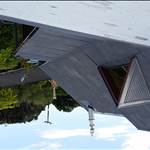
However the clue end rope has no way of being cleated. It just comes out the mast end of the boom, down to a pulley at the base of the mast and that's it. See the attached pics. (Sorry, don't know how to turn them around.) I have just wrapped the end around the boom for now.
This boat was set up for racing by the 2 previous owners. So I must be missing something.


Looks like it should go back to the winch on the cabin top which would be the normal setup.
Select to expand quotetwodogs1969 said..
Looks like it should go back to the winch on the cabin top which would be the normal setup.
So through a clutch to the winch? There is a spare clutch that i thought was broken.
Select to expand quoteBJRobinson said..
So my yacht came with a way of reefing the mainsail.
However the clue end rope has no way of being cleated. It just comes out the mast end of the boom, down to a pulley at the base of the mast and that's it. See the attached pics. (Sorry, don't know how to turn them around.) I have just wrapped the end around the boom for now.
This boat was set up for racing by the 2 previous owners. So I must be missing something.
Whack a cleat on the Clew end of boom or just tie it around boom.
Im no reefing expert but my set up is much simpler.
A hook or bullhorn near gooseneck(near mast)
And a sheet through reef point vlew end.