The subject is being discussed in other threads, particularly "Boat construction for blue water cruising" so I thought the subject deserved a thread of it's own to be more definitive.
We must keep in mind that that the reliability of a bolt on keel depends entirely on the design and construction of the hull to which it is to be attached.
The joint of keel to hull is the highest stress point of the yacht.
There are several types or ways of bolting keels onto yachts described below.
1. A hull of any material, with the keel bolted on with a single row of stainless steel bolts that are parallel.
Any yacht constructed this way is inherently unsafe. There will always be some flexing of the bolts and stainless steel will very locally, work harden, become brittle and fail. Add in different metals such as cast iron, the danger becomes higher.
2. A hull of any material, with the keel bolted on with a double row of bolts that are parallel.
This format is quite reliable providing the keel to hull joint is suitably insulated in the case of metal hulls and the bolts tightened when necessary. This format prevents flexing at the join.
3. A hull of any material where the keel bolts are staggered and angled.
This format is what I found on the British built S&S 34 I had a while ago. From an engineering point of view this configuration would appear to be the best. Whether Swarbricks followed that in their S&S 34s, I do not know. I have yet to hear of a keel falling off an S&S 34.
Mention has been made in the other thread that the best attachment is by using monel bolts/studs with bronze nuts. I agree because monel is a more malleable metal than stainless steel and bronze non reactive to it.
Lucky for me that is the way the keel is attached to my fair "Second Wind". Kiwi designed and built to the highest standards and very much capable of "Blue Water Cruising".
Hopefully she will get her bum wet this year.
The SS34's keel also bolts on to a keel stub so that the length of the lever is less. Modern yachts the keel bolts to the bottom of the hull at almost 90 degrees with a long lever. One of the reasons I chose a Currawong was because of the encapsulated lead keel. I figured that it would be cheaper for a pensioner to maintain. I would still buy an SS34 and the other yachts with the same style of keel though.
You are quite correct Ramona.
The S&S 34 configuration is a combination of hour glass form with bolted on keel. One of the very few.
I would be happy owning an S&S 34 but because my Lotus 9.2 has more generous accomodation, possibly equal or better sailing performance and the advantage insurance wise, handling etc., being less than 10 metres I think Second Wind will more than fulfill my sailing needs.
She has been dry for almost a year now. All coming together soon.
I have an encapsulated keel. I've often wondered why there isn't more of them, as for my simplistic brain it seems like a easier way to spread loads of the keel-hull mating.
Is it just because of the impact to the real estate in the cabin? Or am I missing something else?
SB
I would think the main reason would be that an encapsulated keel means you cannot easily remove it. In a world of mass produced production yachts transport is a key driver and being able to easily remove the keel has vast advantages for non sailing related transport.
Another main ingredient in this equation is not only the orientation of the keel boats but the structure that these bolts are connected to. In newer production boats this structure is a fibreglass matrix grid which spreads the loads throughout the bottom interior section of the hull. Many of the well publicised failures (Cheeki raffiki etc) were likely as a result of failure of the grid where it has become detached from the hull. In most cases this grid is just tack glued to the hull. In the event of a grounding there can be disconnection of the grid from the hull meaning that the integrity of this part of the equation is weakened. This allows the stresses to slowly work at the bolts with more flexing, then failure, The design is not inherently bad, its just very difficult to check the integrity of the grid due to the vast amounts of furniture that needs to be removed to check it, which means its not routinely done, if at all. Please correct me if I am wrong on this interpretation but that's how I read the report on Cheeki Raffiki.
?ll trieszti words and it reinforces the premise, that the re is nothing wrong with a well designed and built yacht with bolt on (lead)keel.
The method of attachment is very important.

The foto, besides my hirsute leg, is the foto of the part of the bilge of the Adams l am privileged to own.
So far l had no trouble with the keel or it's attachment.
The most problematic type of bolt on is where the keel bolts are actually cast into the keel during manufacture. There is no way of checking these without lifting the boat off the keel. Plus you could still have broken bolts buried in the keel casting.
For those bolts which you can actually withdraw to check, the cost of the work is high. If you are buying an old boat, this cost is uneconomical compared to the value of the boat. The problem also applies to other factors such as renewing standing rigging, and replacing saildrive membranes.
Add insurance companies insisting on arbitrary rigging replacement, and we have a lot of boats on the market at giveaway prices.
Select to expand quoteYara said..
The most problematic type of bolt on is where the keel bolts are actually cast into the keel during manufacture. There is no way of checking these without lifting the boat off the keel. Plus you could still have broken bolts buried in the keel casting.
For those bolts which you can actually withdraw to check, the cost of the work is high. If you are buying an old boat, this cost is uneconomical compared to the value of the boat. The problem also applies to other factors such as renewing standing rigging, and replacing saildrive membranes.
Add insurance companies insisting on arbitrary rigging replacement, and we have a lot of boats on the market at giveaway prices.
Stainless steel bolts deprived of oxygen in damp salty conditions can be a long term problem, but knackered keel bolts in a glass boat don't have to be the death of the boat. As someone said, bolt on keels are attractive to modern manufacturers because it makes transport cheaper, but once at the destination the advantage is lost. A boat with a bad keel connection can be resuscitated without a massive cost. If it is done before the keel drops off, of course. It is not rocket science to convert a bolt on keel to an encapsulated keel. Takes 2 men about 10 to 14 working days half that part time. And you need to find somewhere that will sand blast without taking the mast down.
I'd be interested in some rough numbers on the keel failure/falling off per 100,000 yachts ratio.
I imagine it would be in the very low double digits.
Take Cheeky Rafiki. How many thousands of yachts have been designed and built in the same manner as the First 40.7 and have been pumped out of Beneteau, Jeneau, Hanse, Bavaria, Dufour, Hunter, Catalina etc? And how many catastrophic keel failures have eventuated? Or even intercepted and probably averted?
I get the feeling the inherent design flaws of a bolt on keel/moulded floor matrix are very real, but also largely academic, especially for those who can own these boats at the beginning of their lifecycles.
If I was having a medium to high performance flat bellied yacht built, with a high aspect keel, I would specify the system that Bashfords used which was:
-A cast iron keel upper with an integral 45-50 cm wide top plate which sat flush within a 25mm rebate in the hull which provides the keel massive mating surface area with the hull.
-A lead lower keel which was physically bolted to the iron upper via a 50cm high Z join which is permanently encapsulated in epoxy/fibreglass in the factory.
-The keel assembly is bolted to the hull with giant 3" long bolts which run along the perimeter of the flange and can be relatively easily inspected or replaced if needed.
To my mind it was the gold standard in hull to keel unions for a modern hull form.
For an older first generation IOR style hull with a low aspect keel, the encapsulated keel is the gold standard. Why engineer a good joint that probably won't ever fail when you can eliminate the joint so there is nothing to fail.
The second best arrangement is a deep moulded keel stub with a bolted lead lower. If you were ever worried about the cast in bolts you could just fully encapsulate the whole keell with half an inch of biaxle thus relieving the bolts of their duty.
As an owner of a Spacesailer 24 that is in her high thirties, and has a fully encapsulated moulded fin, I can say that it is nice to have at least one critical part of the boat that I don't even have to think about.
One of the reasons I wanted an Xyacht was the keel hull attachment. There would be nothing worse than not having confidence in the keel attachment when your too far offshore to swim home.
Select to expand quoteshaggybaxter said..
I have an encapsulated keel. I've often wondered why there isn't more of them, as for my simplistic brain it seems like a easier way to spread loads of the keel-hull mating.
Is it just because of the impact to the real estate in the cabin? Or am I missing something else?
SB
Hi Shaggy
I notice that you describe Fusions keel as encapsulated and i know that she has a swing keel in her as per your build photo's
Just wondering if you can describe how Pogo attach the keel mechanism to the hull
Regards Don

The last eighty or so years brought developements in design and improvements in material to a level unheard of in times before.
The last forty years brought perhaps even more improvement because of computer aided design and astronomical improvements in material and technology.
The racing and following it the cruising yacht's keel was no exception.
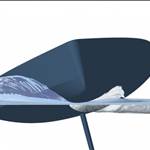
The one on the foto was designed - with 8'6" draught - for a cruising yacht, increasing upwind and reaching performance enormously and also with the cut out in the top trying to reduce shear loading on the keel bolts in case of grounding.

Much more radical design is Sparkman&Stevens' designer Angelo Lavaranos's use of spent uranium in a molded keel to lower the VCG in his I'll fated yacht Allied Bank.

The Swarbrick built S&S34 has staggered offset keel bolts. 9 from memory.
The bolts are accessible and can be checked. I had mine checked when I bought MB and the yard asked me why I wanted it done. They advised I was wasting my money but I said do it anyway. The bolts were correctly tensioned and I did waste my money.
Cisco is on the money, no S&S34 has lost a keel despite being up to 48 years old and with a well known offshore history.
A lot of people read something and believe it. At least on this forum there are a few people who can provide advice with the competence to offer credible advice.
The little Lotus is a great roomy and solid little boat but I can't agree with Cisco that the Lotus has better sailing performance than an S&S34. I'm not sure he meant that as it is a bit of a far fetched claim that goes against the racing, cruising and records histories of the two yachts.
Select to expand quoteDonk107 said..shaggybaxter said..
I have an encapsulated keel. I've often wondered why there isn't more of them, as for my simplistic brain it seems like a easier way to spread loads of the keel-hull mating.
Is it just because of the impact to the real estate in the cabin? Or am I missing something else?
SB
Hi Shaggy
I notice that you describe Fusions keel as encapsulated and i know that she has a swing keel in her as per your build photo's
Just wondering if you can describe how Pogo attach the keel mechanism to the hull
Regards Don
Hi Don,
The keel box is about 3ft high and fills half of the space under the table and is fitted as part of the hull lay up. A SS bolt is pinned through two SS vertical plates and is situated low in the square box structure you can see in the pic below, this acts as the pivot point.

The keel is fitted with an ertalyte bushing. Glass composite with lead in the bottom half of the keel.

When the keel is extended, the head of the keel sits vertical in the keel box for resistance against lateral force. There is no sensation of the keel flexing. Sail with the keel up and turn onto a reach (which you're not supposed to do of course) and you feel a slight flexing, which makes sense looking at the difference in the head position.

The top of the keel box has about 20 x 1/2"bolts as it forms a structural part of the keel box assembly.
Finot Conq have been doing this since design since 1986 and have never had a keel failure.
Hope that explains it ok!
SB
Hi Shaggy
There is some impressive engineering on that boat of yours
Thanks for the information and photo's and a couple of more questions if you don't mind
Any chance of a photo of the attachment point of the end of the hydraulic ram to the hull structure
At what point will the ram release pressure if you hit something with the keel (like when you hit the whale a while ago)
When you touched the bottom the other day have you lifted or inspected her and was there any damage
I suppose the ultimate safeguard would be to have rudders that pivot up if they touch something as well
Also have you worked out any way to stop the main sheet getting caught on the wheel when gybeing
Regards Don
Select to expand quoteMorningBird said..
The little Lotus is a great roomy and solid little boat but I can't agree with Cisco that the Lotus has better sailing performance than an S&S34. I'm not sure he meant that as it is a bit of a far fetched claim that goes against the racing, cruising and records histories of the two yachts. I don't think I quite said that MB but I am forever the optimist.
There is an article in a Kiwi magazine about a Lotus 9.2 that has a very impressive racing record winning round the north island race and Auckland to Suva. It also relates it being dragged over a reef at Fiji and suffering a few scratches.
To clarify the encapsulation, l think Fusion's keel is not an encapsulated one, neither are the ones on the following pics.


The encapsulated keel, the cheapest keel version to produce, is a'bag' or rather cavity glassed in with the hull making it integral part of the structure and filed with leftover punchings, concrete, bits of led, spent uranium or similar heavy material. Also the top part of the cavity could be used for tankage for fuel or water or store batteries which would be a better solution as the centre of gravity would not change according to usage.
The cheaper boatbuiders in Asia used to use this method to cut costs.
If built properly, no short cuts, and proper materials used correctly, nothing could go wrong bar a bad grounding when the case cracks. If the case is not filled properly doing away with air pockets and moisture, or water ingress occurs by a crack, the picture is dier indeed because repair will be costly or not viable.
The bolt on keel might cost more and easier to damage, repair would be easier and cheaper.
Happy to be corrected SirG, I'm applying the term in a literal sense, not in a marine construction term.
SB
Select to expand quoteDonk107 said..
Hi Shaggy
There is some impressive engineering on that boat of yours
Thanks for the information and photo's and a couple of more questions if you don't mind
Any chance of a photo of the attachment point of the end of the hydraulic ram to the hull structure
At what point will the ram release pressure if you hit something with the keel (like when you hit the whale a while ago)
When you touched the bottom the other day have you lifted or inspected her and was there any damage
I suppose the ultimate safeguard would be to have rudders that pivot up if they touch something as well
Also have you worked out any way to stop the main sheet getting caught on the wheel when gybeing
Regards Don
Hey Don,
I'll try for a photo , but there is a ton of rubber and waterproofing that may hinder things. The ram mount is another pin into the keel box to allow the ram to move in an arc.
I don't know the pressure release point mate , I'll see if I can look it up.
Yep, put a GoPro down on the keel, a couple of scratches and no furry stuff, whew!
We're getting the boat measured for her ORC certificate tomorrow after months of waiting as we need millpond conditions to do the stability tests. I can't wait , I'm really curious to see the process. We have to strip the boat completely, sails off, everything out of the boat, it will be a 5am start for us for the measurer at 9am. Because the main will be off the boom, I'm going to take the opportunity to fiddle with a concept I've drawn up that may prevent the mainsheet issue reoccurring, I'll take some pics if it works out!
Regards,
SB
My Northsore 27 has a bolt on keel, bolts look good however there appears to be some separation between the keel and hull at the rear of the keel. Surveyor said not to worry it sometimes happens when lifted with slings. Maybe a concern.


Select to expand quoteshaggybaxter said..Donk107 said..shaggybaxter said..
I have an encapsulated keel. I've often wondered why there isn't more of them, as for my simplistic brain it seems like a easier way to spread loads of the keel-hull mating.
Is it just because of the impact to the real estate in the cabin? Or am I missing something else?
SB
Hi Shaggy
I notice that you describe Fusions keel as encapsulated and i know that she has a swing keel in her as per your build photo's
Just wondering if you can describe how Pogo attach the keel mechanism to the hull
Regards Don
Hi Don,
The keel box is about 3ft high and fills half of the space under the table and is fitted as part of the hull lay up. A SS bolt is pinned through two SS vertical plates and is situated low in the square box structure you can see in the pic below, this acts as the pivot point.
The keel is fitted with an ertalyte bushing. Glass composite with lead in the bottom half of the keel.
When the keel is extended, the head of the keel sits vertical in the keel box for resistance against lateral force. There is no sensation of the keel flexing. Sail with the keel up and turn onto a reach (which you're not supposed to do of course) and you feel a slight flexing, which makes sense looking at the difference in the head position.
The top of the keel box has about 20 x 1/2"bolts as it forms a structural part of the keel box assembly.
Finot Conq have been doing this since design since 1986 and have never had a keel failure.
Hope that explains it ok!
SB
Looks like a good set up Shaggy ! Does the ram allow the keel to fold back on impact
What diameter is the keel pivot bolt ?
And weight of the keel ?
Much better than the old style swing keel with cables and winches !
Select to expand quoteSandS said..shaggybaxter said..Donk107 said..shaggybaxter said..
I have an encapsulated keel. I've often wondered why there isn't more of them, as for my simplistic brain it seems like a easier way to spread loads of the keel-hull mating.
Is it just because of the impact to the real estate in the cabin? Or am I missing something else?
SB
Hi Shaggy
I notice that you describe Fusions keel as encapsulated and i know that she has a swing keel in her as per your build photo's
Just wondering if you can describe how Pogo attach the keel mechanism to the hull
Regards Don
Hi Don,
The keel box is about 3ft high and fills half of the space under the table and is fitted as part of the hull lay up. A SS bolt is pinned through two SS vertical plates and is situated low in the square box structure you can see in the pic below, this acts as the pivot point.
The keel is fitted with an ertalyte bushing. Glass composite with lead in the bottom half of the keel.
When the keel is extended, the head of the keel sits vertical in the keel box for resistance against lateral force. There is no sensation of the keel flexing. Sail with the keel up and turn onto a reach (which you're not supposed to do of course) and you feel a slight flexing, which makes sense looking at the difference in the head position.
The top of the keel box has about 20 x 1/2"bolts as it forms a structural part of the keel box assembly.
Finot Conq have been doing this since design since 1986 and have never had a keel failure.
Hope that explains it ok!
SB
Looks like a good set up Shaggy ! Does the ram allow the keel to fold back on impact
What diameter is the keel pivot bolt ?
And weight of the keel ?
Much better than the old style swing keel with cables and winches !
G'day Sands,
Thanks, yep, bit like an airbag. I was trying to find what the load point before release is for Donk, but I haven't worked it out yet. Soft impacts like sandbanks or hard but slow groundings won't trigger it. The only time was hitting the whale, that moved it back about 6ft. It doesn't disengage the hydraulics after a collision, its more like a venting of the pressure, so the keel stays where it is till you move it back into position.
The keel bolt is about 1 1/2 " from memory. The keel is just under 2 ton, with 300kgs in the upper half and 1600 odd in the lower half, it takes about 90 secs for the ram to go from extended to retracted.
Cheers,
SB
Back in the old day when I was a small sperm they made plugs and dug holes to build bolt on keels!


Another time we filled a mould with lead and it split above ground I remember all men on the shovel trying to scoop the lead back into the boiler! Real men built timber boats it's a vanishing trade now.
Great photos SA ! My mate did something similar lncredable amount of work !
Those photos are priceless !