a general question
has anyone seen any development of combining the three technologies to provide upright stability, course heading and lift at the same time?
fitted to a yacht.
Hi Les,
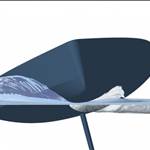
In short, no. But what the kiwis have put up for the next AC will be a huge jump in the evolution for foiling blue water monohulls (if it works!)
It's pretty radical, but they seem confident in the concept.
in seriously thinking about getting a few boats together and sailing over for the AC, would be a great trip and a chance to stooge around the islands.
SB

The DSS foils on CQS had adjustable trailing edge trim tabs on them, but they were designed to be used to limit the righting moment of the foils to avoid overstressing the rig. They got ripped off during the S2H.

Select to expand quoteshaggybaxter said..
Hi Les,
In short, no. But what the kiwis have put up for the next AC will be a huge jump in the evolution for foiling blue water monohulls (if it works!)
It's pretty radical, but they seem confident in the concept.
in seriously thinking about getting a few boats together and sailing over for the AC, would be a great trip and a chance to stooge around the islands.
SB
Is that a fair dinkum pic Shaggy or computer generated ??.
HI Sam,
Computer generated mate. I am unsure of when they move from modelling to construction, but they're confident enough to start claiming they will be faster than the foiling catamarans from the last AC.
Have a look at how they handle the windward foil, it acts as a counterweight thingy, pretty smart.
Thanks for the posts
will be interesting how this technology trickles down to new cruising yachts or retrofits to existing.... I may get in a position soon to have a play
i think the tech can be used for not only improving the hull but also providing digital feedback for improving boat trim and ultimately balance.... as a retrofit. Existing cruisers and sailers could benefit I think
Select to expand quoteshaggybaxter said..
HI Sam,
Computer generated mate. I am unsure of when they move from modelling to construction, but they're confident enough to start claiming they will be faster than the foiling catamarans from the last AC.
Have a look at how they handle the windward foil, it acts as a counterweight thingy, pretty smart.
Unbelievable Shaggy. I like the idea of a foil on the rudder to keep the stern up, perhaps it should canter to stay horizontal but I wonder how it will affect the pressure on the rudder.
Select to expand quotesamsturdy said..shaggybaxter said..
HI Sam,
Computer generated mate. I am unsure of when they move from modelling to construction, but they're confident enough to start claiming they will be faster than the foiling catamarans from the last AC.
Have a look at how they handle the windward foil, it acts as a counterweight thingy, pretty smart.
Unbelievable Shaggy. I like the idea of a foil on the rudder to keep the stern up, perhaps it should canter to stay horizontal but I wonder how it will affect the pressure on the rudder.
Just rethinking the canting rudder foil idea. The whole idea of this concept is to keep the boat completely upright so no
need to canter the foil is there. Doh.
Morningbird,
You could anchor up at Lord Howe at high tide using the foils and rudder to sit on the bottom. Be a bit like having your own cabin overlooking the water at low tide!
I should not kid, they ll probably perfect a way for the thing to walk up onto the beach using the foils next.
Select to expand quoteshaggybaxter said..
Morningbird,
You could anchor up at Lord Howe at high tide using the foils and rudder to sit on the bottom. Be a bit like having your own cabin overlooking the water at low tide!
I should not kid, they ll probably perfect a way for the thing to walk up onto the beach using the foils next.
I hope they do it by November. I have a Comets Hole mooring this year, which isn't bad but not as good as North Passage. Put her on the beach would save a lot of effort.
I just can't see the complications being worth it. There will be hinges that somehow have to be kept moving reliably, rams or something similar, a power source, etc.
Foils have been around in racing dinghies for quite some time now. They remain only a tiny niche. Of interest, when foils first came out in small cats they were rated as having a 7% advantage - now it's down to 4% which is about the same as fitting a spinnaker. The spinnaker is dramatically cheaper and has lower maintenance, with less downside in the conditions in which it can't be used - and yet apart from F18s there's no popular class that uses kites.
Someone over on Boat Design Forum did an interesting analysis of the semi-foiling Open 60s. They are an ideal mono for foiling and their courses are also normally ideal for foiling, but it seems they gain only 1% from using them. How many of us want to deal with enormously expensive foils, hinges, control devices, means of moving the foils, anti-fouling the case or hinge, maintaining the foils (which require excellent surface finish) etc for such a small improvement?
As a guide, there are lots of boats, racing as well as cruising, that have adopted short overlap genoas these days. In a lot of cases that's taken away about 2% from boatspeed but people think it's worthwhile to have less hassle tacking, fewer headsails etc. Why then would people adopt foils when they may only have the same effect on speed as putting a bigger genoa back on, at the cost of more hassle?
Similar issues apply to using foils for seakeeping. For example, the loads often increase; that means more structure. Why not just build a bigger boat?
Select to expand quoteChris 249 said..
I just can't see the complications being worth it. There will be hinges that somehow have to be kept moving reliably, rams or something similar, a power source, etc.
Foils have been around in racing dinghies for quite some time now. They remain only a tiny niche. Of interest, when foils first came out in small cats they were rated as having a 7% advantage - now it's down to 4% which is about the same as fitting a spinnaker. The spinnaker is dramatically cheaper and has lower maintenance, with less downside in the conditions in which it can't be used - and yet apart from F18s there's no popular class that uses kites.
Someone over on Boat Design Forum did an interesting analysis of the semi-foiling Open 60s. They are an ideal mono for foiling and their courses are also normally ideal for foiling, but it seems they gain only 1% from using them. How many of us want to deal with enormously expensive foils, hinges, control devices, means of moving the foils, anti-fouling the case or hinge, maintaining the foils (which require excellent surface finish) etc for such a small improvement?
As a guide, there are lots of boats, racing as well as cruising, that have adopted short overlap genoas these days. In a lot of cases that's taken away about 2% from boatspeed but people think it's worthwhile to have less hassle tacking, fewer headsails etc. Why then would people adopt foils when they may only have the same effect on speed as putting a bigger genoa back on, at the cost of more hassle?
Similar issues apply to using foils for seakeeping. For example, the loads often increase; that means more structure. Why not just build a bigger boat?
Hi Chris
valid points you have raised.
there are several methods to transfer controls all of which have limitations and as a custom build would not justify the outcome as you suggest
any such endeavours to walk this path would need to be developed through modelling and trials
if a couple of knots increase in speed was achieved and a more stable ride as well as cost then might be worth a look