Hi All,
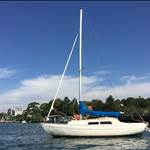
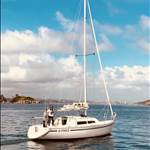
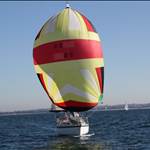
A question for the wiser heads on SB regarding sail trimming in strong winds. I took the folkboat out last thursday on syd harbour in forecast 25kts+. Looking to take myself a little beyond the normal comfort zone I set off with unreefed main and c50% furled jib. This was based on prior experience of 20kts with a very manageable full main and (frankly) online footage of unreefed folkboats in 25kts looking fast but well under control. I should note that the boat has no hook at gooseneck for reefing (?). So, all going well, at 25kts gusts boat felt safe but main overpowered and boat not so much rounding up, rather being "bogged down" to leeward with water over gunwhale. Question is - what is best strategy to depower the main in such circumstances? Let out some main sheet or look to flatten the sail to depower, or adjust traveller (or just figure out how to reef). Cheers.
Mmmm yes, as the saying roughly goes... if you're thinking about reefing you should have already.
Let the main out a little if you don't mind a little luffing or let it out even more and throw in a reef.
I sail a reefed rig quite often, especially when solo. Mainly because my heady is the powerhouse and I'm lazy.
G'day Folk,
In general terms...
Mainsheet: If you're excessively heeled, ease the mainsheet and twist off /depower the top of the mainsail. Wind acting on the upper part of the sail will heel the boat far more than the same pressure acting on the lower half.
The lower half will still give you drive even when the top is completely depowered.
Outhaul: on really hard. A nice curve in the main equals horsepower, flatten it.
Cunningham: on really hard. Bring the maximum draft forward.
Traveller: Ease till the mainsail is luffing. I've been on some boats where a good 30% of the main is luffing and there's little drop in boatspeed.
Make sure you ease the headsail when you do to match the main or you get back winding of the main and stall the flow over the back, lessening the go forward component.
Cheers,
SB
Select to expand quoteshaggybaxter said..
G'day Folk,
In general terms...
Mainsheet: If you're excessively heeled, ease the mainsheet and twist off /depower the top of the mainsail. Wind acting on the upper part of the sail will heel the boat far more than the same pressure acting on the lower half.
The lower half will still give you drive even when the top is completely depowered.
Outhaul: on really hard. A nice curve in the main equals horsepower, flatten it.
Cunningham: on really hard. Bring the maximum draft forward.
Traveller: Ease till the mainsail is luffing. I've been on some boats where a good 30% of the main is luffing and there's little drop in boatspeed.
Make sure you ease the headsail when you do to match the main or you get back winding of the main and stall the flow over the back, lessening the go forward component.
Cheers,
SB
having sailed folkboats a bit and everything shaggy says is right if you have a controllable mast you can also back the diamonds off a bit to induce a bit of overbend in the mast
Pull your Genoa cars back to flatten headsail. Be mindful of the fact you have reefed your headie.
keep in mind that not having a hook at the gooseneck does not mean you can't reef. I personally don't like them as they can pierce the sail. I just use a length of dynnema as tack line, attached to a strong point on the gooseneck.
Select to expand quotecazou34 said..
keep in mind that not having a hook at the gooseneck does not mean you can't reef. I personally don't like them as they can pierce the sail. I just use a length of dynnema as tack line, attached to a strong point on the gooseneck.
Agree with everything said. Does you sail have reefing points on the luff and the leech? If so its easy to reef and really worth a bit of mucking around to make it work. Basically all you have to do is get the luff and the foot tight and the foot attached to the boom. I like to lash the tack forward to the mast before I tension the foot to take some of the pressure of the mast track sliders.
Select to expand quotecazou34 said..
keep in mind that not having a hook at the gooseneck does not mean you can't reef. I personally don't like them as they can pierce the sail. I just use a length of dynnema as tack line, attached to a strong point on the gooseneck.
+1
25kts+ ?? I reckon just about any sail boat would be well into reefed main territory.
Select to expand quoteandy59 said..cazou34 said..
keep in mind that not having a hook at the gooseneck does not mean you can't reef. I personally don't like them as they can pierce the sail. I just use a length of dynnema as tack line, attached to a strong point on the gooseneck.
Agree with everything said. Does you sail have reefing points on the luff and the leech? If so its easy to reef and really worth a bit of mucking around to make it work. Basically all you have to do is get the luff and the foot tight and the foot attached to the boom. I like to lash the tack forward to the mast before I tension the foot to take some of the pressure of the mast track sliders. Correction i meant the clew attached to the boom
Thank you all - some great advice. Re reefing, I do have reefing points at leech and luff, so will need to get some practice in. The leech does have a reefing line attached, routed through boom, but lack of hook has put me off trying (as you can see I'm a pretty fair weather sailor).
Re reefing necessity, I've always thought of boat's >50% ballast ratio as helping with stronger winds, but think have found the limit, or gone just over! If caught out in stronger gusts will try the trimming (tightening foot and luff), also lowering traveller. First step could be pulling on the backstay. Lots to keep learning - thanks all!
I often refer this guys advise to people when they ask me a similar question,, Sure,, I understand that boats differ along with rigs, sails etc
and things may not always be the same,,, along with the skippers experience , But this guys Stiff breeze advice seems to me to be a good base line for the average skipper on the average sail boat.
Check it out
I suspect you'd be better off reefing the main and sailing with an unrolled jib as they are not great for any sort of windward work.
Its also worth finding out which one of the sails works best by itself. For instance my boat sails OK with a small jib and no main, so when its blowing 30 or more we can drop the main and lash it down. However boats with small mains can often sail OK under that alone (and if you have a furling jib you can get rid of it easily.
Select to expand quoteblackswan said..
I suspect you'd be better off reefing the main and sailing with an unrolled jib as they are not great for any sort of windward work.
Its also worth finding out which one of the sails works best by itself. For instance my boat sails OK with a small jib and no main, so when its blowing 30 or more we can drop the main and lash it down. However boats with small mains can often sail OK under that alone (and if you have a furling jib you can get rid of it easily.
The yacht in the video above has a padded luff on the headsail. These sails go to windward fairly well with a few turns on the furler
Select to expand quoteRamona said..blackswan said..
I suspect you'd be better off reefing the main and sailing with an unrolled jib as they are not great for any sort of windward work.
Its also worth finding out which one of the sails works best by itself. For instance my boat sails OK with a small jib and no main, so when its blowing 30 or more we can drop the main and lash it down. However boats with small mains can often sail OK under that alone (and if you have a furling jib you can get rid of it easily.
The yacht in the video above has a padded luff on the headsail. These sails go to windward fairly well with a few turns on the furler
As does MB. Rolly Tasker furling headsail with padded luff lets me get down to nearly 50% before performance falls way off. Obviously I'm talking cruising offshore passages, not racing.
My new seldon furler takes a turn in the middle first before curling the foot. This takes a lot more of the belly out.
Two things surprisingly not mentioned:
Firstly, what way one's main is equipped for the mast-horn if there is a horn (hook) involved?
If one must hang the cringle on the horn, one might damage the sail when the sail rubs against the end of the horn. A very short strop with two rings on each end, sawn into the reef cringle solves this conundrum.
Secondly, if one has reefed one's sail and wants to tie up the bunt, one's better off tying the bunt loosely to the foot of the sail, NOT THE BOOM, as the tie-cringles on the main are guaranteed to rip out in a very short time as they are not strong enough holding down the foot, ruining the main sail, utterly.
Select to expand quotesirgallivant said..
Two things surprisingly not mentioned:
Firstly, what way one's main is equipped for the mast-horn if there is a horn (hook) involved?
If one must hang the cringle on the horn, one might damage the sail when the sail rubs against the end of the horn. A very short strop with two rings on each end, sawn into the reef cringle solves this conundrum.
Secondly, if one has reefed one's sail and wants to tie up the bunt, one's better off tying the bunt loosely to the foot of the sail, NOT THE BOOM, as the tie-cringles on the main are guaranteed to rip out in a very short time as they are not strong enough holding down the foot, ruining the main sail, utterly.
I had the same thoughts. MB has a D ring on a short strop to go on the horn.
Never would I tie the foot to the boom. It is only tied to protect it from wind and sea.
In most circumstances I don't bother tieing the first reef because the luff stays in the mast track and there is little bunt to worry about. The 2nd reef I have to drop half a dozen lugs out of the track and the sail needs tieing up.
this is a link to photos of the classic fleet racing in Brisbane on the weekend in 35 knots very damp but interesting sail trim in heavy breeze i particularly like ragamuffin the twister and the h28 most of these boats are seldom raced though some are campaigned most boats have experienced racing cruising owners thats what makes the application of there trim interesting
www.facebook.com/pg/surfsailkite/photos/?tab=album&album_id=226532421448739
Nice photos. Old boats but modern sails in most cases. Liked the Twister with the full batten main and padded luff headsail.
Select to expand quoteM
I had the same thoughts. MB has a D ring on a short strop to go on the horn.
Never would I tie the foot to the boom. It is only tied to protect it from wind and sea.
In most circumstances I don't bother tieing the first reef because the luff stays in the mast track and there is little bunt to worry about. The 2nd reef I have to drop half a dozen lugs out of the track and the sail needs tieing up.
I re visited your directors cut video the other week of The Lord Howe trip. I was a little surprised to see the sail lugs out of the track!
I did not see the vid but if the sliders have to be removed for reefing...well, l had the same problem and l could not comprehend that on my yacht. In my experience, by the time l got to the third reef the sail was unmanageable, wind increasing, besides, looking like an Easter ham with the ties around it.
Imo it is not safe, extremely difficult to achieve, overly laborious and in circumstances it could become outright dangerous to equipment and, or crew.
I am not critical of other sailors, far from it.
I had the same problem and had to solve it, which l did, creating enough space between boom and tack-cringle position by moving the tack position just a bit higher, 're-positioning the horn and making a new lockable mast gate further up the mast track - before only having a slit in the track but no gate low down on the track - at the appropriate height for making it possible to employ all three reefs without the removal of any sliders.
I found, having a fully battened main makes the reefing easier by far.
The gale force setting on Rhapsody is easy. Furl the jib, bend the cutter sail, 6,2 sqm, and the third reef, 4,9sqm and carry on.
If this would prove to be still too much, l would bend the 2,2sqm storm sail and the trisail which would cause a problem as the tub does not have a second mast track. Luckily, l never ever been even close to that possibility.
Select to expand quoteRamona said..M
I had the same thoughts. MB has a D ring on a short strop to go on the horn.
Never would I tie the foot to the boom. It is only tied to protect it from wind and sea.
In most circumstances I don't bother tieing the first reef because the luff stays in the mast track and there is little bunt to worry about. The 2nd reef I have to drop half a dozen lugs out of the track and the sail needs tieing up.
I re visited your directors cut video the other week of The Lord Howe trip. I was a little surprised to see the sail lugs out of the track!
Until then I had always put the 2nd reef in in plenty of time for it to be straightforward, if a little cumbersome. On that trip we had to put a 2nd reef in in a minor gale as we left the island and the difficulties became apparent.
Since then I have installed a cunningham block and tackle for the 2nd reef so that I can set the tack higher and leave the lugs in the track. There is still a lot of sail that needs tieing up with a 2nd reef.
For simplicity MB has two reefs, deep and very deep. The 2nd is like a 3rd and can be used up to 30-40 knots.
Select to expand quotesirgallivant said..
I did not see the vid but if the sliders have to be removed for reefing...well, l had the same problem and l could not comprehend that on my yacht. In my experience, by the time l got to the third reef the sail was unmanageable, wind increasing, besides, looking like an Easter ham with the ties around it.
Imo it is not safe, extremely difficult to achieve, overly laborious and in circumstances it could become outright dangerous to equipment and, or crew.
I am not critical of other sailors, far from it.
I had the same problem and had to solve it, which l did, creating enough space between boom and tack-cringle position by moving the tack position just a bit higher, 're-positioning the horn and making a new lockable mast gate further up the mast track - before only having a slit in the track but no gate low down on the track - at the appropriate height for making it possible to employ all three reefs without the removal of any sliders.
I found, having a fully battened main makes the reefing easier by far.
The gale force setting on Rhapsody is easy. Furl the jib, bend the cutter sail, 6,2 sqm, and the third reef, 4,9sqm and carry on.
If this would prove to be still too much, l would bend the 2,2sqm storm sail and the trisail which would cause a problem as the tub does not have a second mast track. Luckily, l never ever been even close to that possibility.
Agree. See my reply to Ramona's post.
Select to expand quotesirgallivant said..
I did not see the vid but if the sliders have to be removed for reefing...well, l had the same problem and l could not comprehend that on my yacht. In my experience, by the time l got to the third reef the sail was unmanageable, wind increasing, besides, looking like an Easter ham with the ties around it.
Imo it is not safe, extremely difficult to achieve, overly laborious and in circumstances it could become outright dangerous to equipment and, or crew.
I am not critical of other sailors, far from it.
I had the same problem and had to solve it, which l did, creating enough space between boom and tack-cringle position by moving the tack position just a bit higher, 're-positioning the horn and making a new lockable mast gate further up the mast track - before only having a slit in the track but no gate low down on the track - at the appropriate height for making it possible to employ all three reefs without the removal of any sliders.
I found, having a fully battened main makes the reefing easier by far.
The gale force setting on Rhapsody is easy. Furl the jib, bend the cutter sail, 6,2 sqm, and the third reef, 4,9sqm and carry on.
If this would prove to be still too much, l would bend the 2,2sqm storm sail and the trisail which would cause a problem as the tub does not have a second mast track. Luckily, l never ever been even close to that possibility.
Yep, agree SirG, fully battened mainsails are a dream to reef.
I don't luff up to reef, we stay powered up, ease the mainsheet a couple of feet and then ease halyard to suit. The main drops into the lazyjacks neatly because of the battens.
All three reef positions have dedicated shackles on the mast, (the third reef is our stormsail alternative) which makes it much easier also.
wow shaggy that sounds like a lot of drama we just ease the halyard upwind or down and put afew rolls on the boom with the handle on the boom nothing to tidy away 

Boty, I'm surprised you remember what a reef is! Pagan doesn't need a reef, in fact I think she'd fight you if you tried.
Select to expand quoteMorningBird said..Ramona said..
Until then I had always put the 2nd reef in in plenty of time for it to be straightforward, if a little cumbersome. On that trip we had to put a 2nd reef in in a minor gale as we left the island and the difficulties became apparent.
Since then I have installed a cunningham block and tackle for the 2nd reef so that I can set the tack higher and leave the lugs in the track. There is still a lot of sail that needs tieing up with a 2nd reef.
For simplicity MB has two reefs, deep and very deep. The 2nd is like a 3rd and can be used up to 30-40 knots.
The cunninham block set up is a good idea. The problem with using a tack hook on the boom is luff tension can only be applied by the halyard and that's never very effective. Luff tension is always easier hauling down on a cunninham eye.
I have fully battened mainsails that drop into the lazyjack so reefing is dead simple from the cockpit. Even down to the third reef the excess sail sits in the bag. 3 reefs with the halyard marked with a marker pen so I just jam off the halyard when the mark just exits the jammer. This leaves the new tack cringle about 300mm above the boom and then the tack reefing line is winched down to a suitable tension. Just recently I have started to run the second and third reef lines down the same side of the sail and this allows the reefing cringle to pass down lower than the stacked sail slides and this seems to make it neater.
To complete the picture, as l sail mostly single handed, l modified the reef line.
To add, l really got four reefs if we include the flattening reef which takes out only 0.6sqm of sail but when l run, it helps with the lowered head to scandalize the main! Also, the Cunningham is living with a similar hook, like the reef line, so l can unhook it and control the tack reefing-cringle tension with it to a certain extent.
Instead of first, second and third reef lines and it's associated turning blocks and spider web, l use a single line running inside the boom and an attached hook at the end of it, which l hook into the appropriate reef cringle at the clew while the tack-ring on the strop is put on the horn. It lifts the foot of the sail by a few inches helping with the higher position for the boom sliders to accommodate the bunt.
Yeah, l know, l must go to the mast with this set up - it's a 28 footer 'only' - but on the way l can adjust the boom slider and clamps for the boom reefing marks for the turning block which is held in place by two adjustable sliding clamps.
The system works perfectly, l use an 8mm reef line and l can work it, and the out-haul by sitting on the top of the open companion way. The boom's got it's own winch.
I know it is unusual, l call it innovative, but it works well.