Hi all,
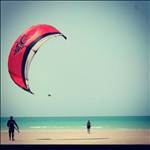
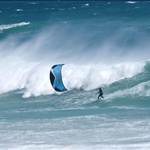
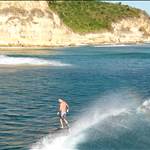
I'm not happy with the shot's I'm getting, just to far away.
Canon D60
Lens 75 - 300
Next step I guess is to get into the water.
Been searching but I thought I might ask if anyone has done it and what gear they used?
I'm after entery level for a start.
show us some links to your shots so we can help.
going beyond 300mm to get closer to the action gets expensive and requires more camera gear. tripods monopods etc. as you have probably already worked out.
getting into the water, are you going out in the surf or are you in a shallow flat water spot? do you want to keep working with the D60 or happy to get something else.
i use a Nereus waterproof bag for my DSLR. its light weight and adaptable to any body type. so can keep using it when its time to upgrade the body. its not the most streamlined thing and the buttons are not always easy to press if you need to change a setting. but it more than does the job.
Ian,
Check out this site, great photography tips and info
www.kenrockwell.com/
Sunny and windy here in NZ 
Thanks JP
I've got a tri and mono pods- just need to get closer. The shots are ok but not close enough for my liking.
Would like to keep using the D60 in a housing if possible.
I'll have a look at the site 62. good looking fella in your avatar.
Don't forget to check out the snow kiting sceen.
Have a look at mirror lenses They are cost effective
They do have there draw back like fixed fstop and a different out of focus look
But they do have some pluses as there are quite short in comparison to standard lenses
They are used by birding photographers a lot. I personal like the out of focus area look they give
advancedphototech.wordpress.com/lenses/mirror-mirror-a-guide-to-choosing-and-using-mirror-lenses/
www.bhphotovideo.com/c/buy/telephoto/Ntt/500mm+800mm+mirror+lens/N/0
Hey Ian,
I've got a Canon 7D with a Sigma 150mm - 500mm Lens (around $950 or so) which has a pretty good 'bang for the buck' performance so you could start there. I will one day get a Sigma 2X adaptor (around $400 or so) which apparently works ok but as yet not sure how that will go. It is fairly heavy so you'll need a tri/mono pod and the missus will complain for sure if you dare to ask her to take some pics. If you get the Canon equivalent lens you'll be paying big so Sigma isn't bad, does what I want anyway. Take the camera in to camera shop and ask if you can try the lens on your camera, take a few shots and see if you like it.
Good luck and have fun.
cheers,
Robbie 
What is the lens? You say 75-300 so I assume you mean a canon 75-300 f/4-5.6 which is a crap lense by sports or any standards.
The thing with photography is that is 90% lens and 10% body when it comes to equipment. Good lenses are expensive but they last a lifetime and their focus speeds are the difference between good and bad photos. Most people think the focus is done in the body when in reality it's done in the lens. If you want a good sports lens at a competitive price, start with something like a 70-200 f/4 or a 300 f/4. They $1000+ but most of the time! anything less than that is useless. For Canon, only look at L series lenses.
If you do decide to get In the water don't be shy to spend on a good housing system, it could cost you a lot less in the long run.
Also are you getting the most out of your current set up? Keep your ISO as low as possible (100), to get the best out of your lens try shoot at double its f-stop rating (ie. if it's 2.8 shoot at 5.6), this will keep things sharp/er. If you keep quality high then crop into the image in post and play around with some sharpening tools in Photoshop.
Hopefully this saves you a few grand on new equipment..
Depending on your budget for a water housing Outex make some cool cases ... they are a lot cheaper than your full DSLR diving water housing but I don't particularly trust the super cheap 'zip lock bag' type cases for my DSLR.
As others have said a faster lens will also help a lot. If you are getting into the water you may not need a huge telephoto though so you could get a shorter telephoto prime which would keep the lens cost down
Or throw this in there general direction :)
www.gizmodo.com.au/2013/11/the-throwable-panoramic-ball-cam-is-finally-hereand-its-incredible/
Yeah I am experimenting with my DSLR 55 to 250mm just not quite gonna cut it so ill prob just go to 500 to 1000 mm see if that works lol
You've got a 60D very nice camera I had one when I was starting out. Saffer is right the 75-300 is a pretty ordinary lens, but the EF 70-300 is a lot better and very good bang for the buck goes for around $500 new. But if you want more reach its very hard to get better value for money other than the Canon 100-400 L, but if budget is an issue then the Sigma 150-500 is ok.
You can get a housing for the 60D but a decent one will cost more than the camera!
But if you want really up close and personal shots getting in the water with a housing is the only way. Panasonic, Sony and Olympus are the 3 main brands of compact cameras that are either waterproof or can fit in a OEM housing, be prepared to spend a few bickies and also to have to swim and got in close to the subject.
If you buy Sigma 150-500, a 1.4 and 2.0 extender will not autofocus on that lens. The Canon 100-400L will autofocus with a 1.4 extender but only the centre point, and will not autofocus with a canon 2.0 extender at all.
The shot below was taken with a 70D which is just a newer version of a camera that similar to yours, but to be fair I was using a Canon L prime 500mm F4 and Extender 1.4 giving an effective range of 1120mm on the 1.6 crop factor 70D (same as 60D) body. I was approx 700-800M away on the walkway at Cronulla and this guy was bodyboarding at Shark Island. Specs for the shot are F5.6 Iso 640 and shutter 1/3200th and the best advice I was given was to invest in good quality L series lenses, and even to avoid the Canon EFS lenses as they only fir the crop bodies (70D and under).
Also this is a new Nikon thats fully waterproof - www.cnet.com/

I do agree that a long fast telephoto is the best way to go ... but at around $400 the Outex would be cheaper, and still enable some 'wow' shots from within the water
Select to expand quotehigh as a kite said..
Hi all,I'm not happy with the shot's I'm getting, just to far away.Canon D60
Lens 75 - 300Next step I guess is to get into the water.
Been searching but I thought I might ask if anyone has done it and what gear they used?
I'm after entery level for a start.
300mm should be plenty. Just get closer and buy a monopod because windy days will throw the lens around. It's heavy. Up your ISO so you are shooting at a higher speed. Remember; light bounces of water so you may need to compensate for extra light the camera 'thinks' it's reading. Muck around with giving it a extra half-stop of full stop. Use the bracketing ... or just get a waterproof point-and-click for $250 (Gumtree!!!!), and get out there with them!
Select to expand quotealverstone said..
300mm should be plenty. Just get closer and buy a monopod because windy days will throw the lens around. It's heavy. Up your ISO so you are shooting at a higher speed. Remember; light bounces of water so you may need to compensate for extra light the camera 'thinks' it's reading. Muck around with giving it a extra half-stop of full stop. Use the bracketing ... or just get a waterproof point-and-click for $250 (Gumtree!!!!), and get out there with them!
Actually 300mm is just enough, really only works where the waves break close to rocks where you can stand, for normal beach breaks its never enough and extenders will not allow the cheaper smaller aperture lenses to autofocus.
Light actually "bounces" off everything we can see, if light is not reflected, then the eye cannot see nor can a normal camera. Shooting action requires a fast shutter speed if your aim is to "freeze" the action and get a crisp sharp image, supporting the camera helps but fast shutter speeds are critical. 1/1000 is the beginning and to really freeze a fast moving subject going well above 1/2000th is best. Shoot in TV mode on the 60D, dial in 1/1600th do a test shot until the picture is well exposed, if it is under exposed increase ISO (the camera will adjust to largest aperture possible). Check after each shot by viewing on the LCD and learn to use the histogram (google it). All this advice is good but nothing beats practice! Shoot often as possible always have your camera with you if possible!
Thanks guys, some real good advise. will research more.
I have the EF 70 - 300 and use either the mono or tri pod. Also keep out of the wind if possible.
What I'm trying to do is get a crisp shot and crop. Jury still out in my mind to whether a longer lens will achieve a better result(with in my budget anyway)
Steve,
I get a similar result as in your pic.
What I'm trying to achieve is to be able to bring the riders face into focus.
Well aware that the light and AF might be picking up the waves around him.
Probably expecting too much and it might be time for a swim.
dont forget steve is a fricken long way from the action in that shot^^^.
i think what you want to achieve is possible with the right gear and skill.
ps. love reading your stuff on cameras steve. always interesting... 
Select to expand quotehigh as a kite said..
Thanks guys, some real good advise. will research more.
I have the EF 70 - 300 and use either the mono or tri pod. Also keep out of the wind if possible.
What I'm trying to do is get a crisp shot and crop. Jury still out in my mind to whether a longer lens will achieve a better result(with in my budget anyway)
Steve,
I get a similar result as in your pic.
What I'm trying to achieve is to be able to bring the riders face into focus.
Well aware that the light and AF might be picking up the waves around him.
Probably expecting too much and it might be time for a swim.
Unless you can get the rider to fill about 20-25% of the frame you will not be able to crop so that the face is sharp and distinguishable. Set your camera auto focus to use only the centre focus point and make sure thats on the subjects face when you push the shutter button. Make sure you are shooting at 1/1600th or faster. Like I said the EF 70-300 is actually a good value lens and is quite sharp. The thing to understand is that your camera is a crop sensor and that it effectively increases the range of your lens by a factor of 1.6 so your 70 to 300 is really 112mm - 480mm which is a pretty good range for shooting kitesurfing from the beach or a point. Always shoot in RAW and get a copy of Lightroom on your computer, so you can adjust the image.
hey Ian,
I use a Cannon 7d and a cannon L series 70-200 f4 as my mainstay setup, the real trick is to get in close and make sure the sun is in the right position keep your ISO low and your shutter speed above 1/1000. (Min speed if they are coming straight at you)
You will get a much better hit rate with the high quality lenses as the ultrasonic focus is much faster
I don't shoot in raw as the 7d shoots at 8fps and on a good day l can take a 1000 images or more, uses up way to much memory. Also the buffer in the camera fills up very quickly . Photoshop or lightroom is definitely the way to go for post processing.
Shooting in raw does give you a lot more room for adjustment and detail recovery in Photoshop. I don't sell any photo's l just give them away and l have never met a kiter that doesn't like photo's of themselves whatever the quality.
I am lucky, where l kite l can get out on the sandbar or walk out in shallow water for a fair way "god help me if l trip as l don't use a camera housing"