Yep
That will work and reduce turbulence / drag.
Same technology as being used on aircraft wings.
Good idea that 
These kites seem to lack a little bit of grunt.
Maybe the power is escaping out thru the window.
Backstalling is caused mainly due to poor flying technique and incorrect tuning.
The vent seems to create deform and canopy flutter.
Sounds a bit like the "speed holes" gimmick that a car salesman tried to use on Homer Simpson to get him to buy a car...
I guess the idea is to make the sweet spot where air is flowing over the kite surfaces more noticeable. I dunno...
Why not stick some wooly tell-tales on the kite instead? No holes, though you would need to look at the kite all the time to make sure it was trimmed properly...
Interesting stuff!
I wonder whether it is as effective with the effectively zero foil thickness of an inflatable kite? Works on foil kites and airplane flaps because it's like having a second smaller wing that can really crank the exit vector of the flow off the trailing edge without (More change in flow direction = more lift). With an inflatable there is no foil thickness and the shape is pretty well flat at that part of the wing - I reckon you might just be dumping pressure to the top of the wing?
But realistically - it's not often you are looking for absolute max power from your kite, esp wave-oriented kite. If it stops backstalling when unhooked it's probably a good idea
Another technique that i haven't seen on kites yet is leading edge vortex generaters.
They allow the flow to remain attached for longer.
Therefore they have the same result as the little openings, delaying the stall angle, however you wouldn't loose any rigidy in the canopy.
Just check out the leading edge of a humpback's flipper, those tubercles allow the flipper to operate at much a mucher greater angle of attack.
It's a concept that was been used in motorsport for years.
Guys! My first post on your forum, hope to be here regularly now that I know about it.
I saw some web traffic coming in from this thread and it lead me here to see what you were chatting about. I hope you don't mind me jumping in but I'd love to lend you our company's position on the Venturi Kites for this season and answer any other questions you might have.
So, to address some of the stuff that has already come up:
1) I am surprised by waveslave's comments that the kites lack grunt. I have found these kites to be the gruntiest we have produced and we are recieving some very solid on other international forums and through user driven demo days here in North America. (for example, kiteforum.com/viewtopic.php?f=1&t=2342366&start=90)
2) There is actually no draw back to having the vents on the kite. When flown at a normal angle of attack the airflows over both the top and bottom surfaces of the kite. Bernoulli's Principle (en.wikipedia.org/wiki/Bernoulli's_equation) relies on this air flow on both sides to produce lift. As the angle of attack is increased turbulence builds up on the back side of the wing and the air flow peels off of the kite. This disturbance reduces lift and invokes the stall. By introducing vents on the kite we allow clean flowing air to push through these vents only when a vacuum is forming in the turbulent area and pull this turbulence down and away from the kite, relaminating the airflow and reducing the onset of the stall. When flown correctly the kite's clean flowing air flow over the top will not actually allow the vents to open.
3) The biggest benifits we have seen in the introduction of these vents is the reduction of the onset of a stall. This is key for riders in the surf, unhooked new school tricks and for beginners who tend to oversheet the kite when learning. I have also found, and others agree, that the vents seem to increase loft in the kite making for a slower descent from jumps. This was un expected but appreciated and is obviously a nice feature with smaller kites!
We intend to continue producing kites with Venturi Technology on them well into the future. The Chad makes mention of LE vortex generators. I can tell you that there are a number of aeronautical innovations that airplane designers have introduced over the years that we are looking at incorperating into our kites for future development. Obviously the single biggest concern is balancing weight concerns with potential performance benifits.
Also, Junglist...I like the avitar. I used to listen to a lot of Metalheads back in the day (like way back). I saw Goldie a couple times in '92 and '94...quality stuff. Check out an artist named Burial, new school Dub Step stuff that is really clean and nice!
John Z - Ocean Rodeo Sales.
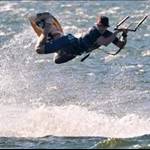
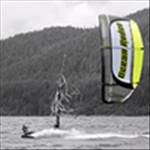
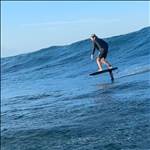
PS. Here's a picture of 2 of our team riders hitting Lanes in Maui late last month.
(You can see the full set here: www.flickr.com/photos/oceanrodeo/sets/72157604264746949)

Welcome aboard mate.
Ha, I really thought that with the distance (in time and space) that nobody would suss the avatar. I have been mixing Jungle myself for years, keeping it old school for a long time now. I have been playing with some of the more up tempo hardcore dub step tunes coming out of the UK, nasty stuff.  Nice to see there are some OJ kiters out there
Anyway, back on topic.
It is encouraging to see that you are using aviation technology, I work in the industry (though not in aerodynamics) and some of the principals being developed could be adopted by kiting in the future. Winglets being a possible for flatter kites?? This tech could really change the face of kiting, although (as you say) the weight issue will have to be overcome. Nice to see the proof of (and someone prepared to talk about) proper R&D.
I would be interested in a demo of the 09 model when they hit these shores.
Big up
J
Cheers Junglist! Glad to be a part of the community and happy to give some straight up answers :)
As for 09 kit, right now we only have 2 distribution points for Australia - Mel @ Kitesurf Direct in Melbourne and Sonya and Jason @ West Oz Kiteboarding in Rockingham. Both companies are doing excellent jobs for us but we are looking to expand our exposure. Please contact either one of these guys to get on the mailing list for when they will have the new gear, I expect to be sending them 2009 gear by the middle of August.
John
I dun wanna brag but i was an Aircraft maintenance Engineer for 3 years and this is what i used to study all day everyday.. (just so ppl know, Aeronautical Engineers design aeronautical technology eg. flaps, spoilers, engine cowlings, intakes, afterburners etc. They dont fix planes, and to get into that career its very easy...basic passes in average classes will get you in.)
This is a really good idea, increasing the angle of attack will create turbulence due to lack of Boundary Layer Control and stalling the kite, with less than 30% laminar flow (the airflow that sticks to the aerodynamic surface) Friction between the air and the surface uses part of the energy in the air, and the boundary layer thickens, becomes unstable and turbulent and creates a great deal of drag, causing the wing or other structure to stall.
Aboard aircraft 'slats' are used to allow it to fly at a high angle of attack without stalling, a Slat is a section of the leading edge of the wing mounted on curved tracks the move into and out of the wing on rollers.
The vortex generators you're thinking of indeed related. These are small low-aspect-ratio airfoils that are installed in pairs on the upper surface of the wing, on both sides of the vertical fin just ahead of the rudder and on the underside of the vertical stabiliser. These pull high-energy air down to the surface which energises the boundary layer and prevents airflow separation until the surface reaches a higher angle of attack.
Creating vortex generators on aircraft is easy, on kites however as has been said previously is difficult. To create an airfoil capable of withstanding the pressure of the airflow and have it made of fabric or synthetic materials without adding much weight to the kite would be sacrificial, any achievement in lift would be countered by the extra drag created by the extra weight needed for the vortex generators.
I agree that the slot will increase the angle of attack and delay stalling. However, to my mind, it will also increase drag. This means the lift/drag ratio is not as good. Therfore the kite will fly more to leeward. Therefore it will have less upwind abillity. Sorry - its just how I see it.
I’ve had a full season on the 08 Rise now and I have to say well done to OR for a quality built kite, I have the 8m and it has a huge wind range with heaps of grunt. The only thing that could be improved is the bag, (cant leave struts pumped up).
As long as they keep up the quality OR will be a big seller in oz over the next few seasons.
ESP technolgy could be the latest.
Looking at the bridle kite revolution, people love kites that hang down wind.
Maybe it's a good thang dude.
But not for cross shore conditions when wanting to cut back and smack the white water kites hanging off the wind aren't so good.
I recon the wing needs to be balanced. Forget bridles that wear and hang off the wind. Its just something I recon. 
sic kite see my review www.seabreeze.com.au/forums/topic.asp?TOPIC_ID=32506&SearchTerms=rise
slave you know sh1t my only complaint is they are so grunty. I am 110kg and use a 6 and an 8 mostly .
RK open the zip to extend the bag, I always leave mine with struts pumped up.
cheers andrew
Hey orsales, are you saying these new kites have more hangtime than a conventional bow or hybrid? How does that work? you have holes in your canopy.
What is the bottom end on the 12m?
With this new feature, are you able to increase the angle of attack or just focusing on eliminating backstall.
It’s great following the development of Inflatable kites, leading edge bridals and jet flap technology………
Wonder what’s next, maybe a double skin and no pump
The evolution is almost complete
Few comments over on this site:
www.seabreeze.com.au/forums/topic.asp?TOPIC_ID=36945
Technological breakthroughs in kites today are not going to sell many more kites. The kite market is saturated with kites and there is a trend is to unhooked, strapless C kite thrills.