These are the only signs that I could find - I think they appear in the IKO workbook. They don't seem super useful to me especially out in the water when dealing with a possible collision (as per aerial attack thread).www.ikointl.com/intl_k_signs.php?menu_id=2
I think learning your right of way rules are much more important especially in the surf. There's normally heaps of room in the surf. If someone is riding a wave or you notice they can't see you, change direction if safe to do so or get downwind of them if safe to do so.
2 Riders passing - upwind, kite high - downwind, kite low.
Look behind you before you turn. If following someone, expect that they could turn any second.
IKO right of way rules are herehttp://www.ikointl.com/priority_rules.php?menu_id=2
I thought sneaking from behind is not conform with the priority rules.... just to get clarification of that because I have observed this now quite often..... from my understanding if somebody is going to overtake a slower rider upwind he (the overtaking one) has to keep at least one line length distance to the downwind rider so that the slower/downwind kiter has enough space to turn and move the kite.
The Overtaking one has to watch and not the downwind kiter because he can not see the other guy who has sneaked from behind or did I get this wrong?
Cheers
Granini
Of those the only on that is any good is of course the head tap, but If you need to turn and there is someone too close to you, the "wave hand in a circle above head" works really well, most people get the idea beause it is so obvious that you are gonna u-turn that they get out the way pretty quick. just give some time between the signal and the manouvre. could be handy for those i see complaining about being 'pushed' up right to the beach by someone else.
James
Yes you are right, I didn't cover overtaking from behind - I was referring to just travelling in the same direction as someone which happens often in crowded spots.
IKO Rules:
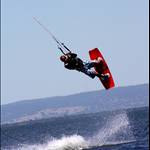
5. When jumping you have no right of way. You forfeit priority as you leave the water regardless of tack you were or are on. Leave a clear distance of 50m downwind, and 30m upwind.
Am I just plain thick or does it make more sense for the person in the air to have right of way (right or wrong) as I'd suggest it's a bit easier for someone on the water to take evasive action and avoid a collision if necessary (ie. the jumper gets boosted more than anticpated or loses control mid-air) ??
What so regardless of where you are, all you have to do is boost to have right of way, and everyone else has to take evasive action???? HELP
If someone is tailing me and I need to turn, I make it obvious that I am tapping my helmet (meaning I am signalling for me), looking back over my shoulder at them, and then signal with a straight arm and hand back in the direction/tack I am about to take. When heading in to shore and running out of water it is the best I can do, then it is time to turn. Has worked pretty well to date. 
Same goes for when a close head-on pass is coming. If I am going to concede ground or hold my line tapping my helmet and then signaling my intended line with a straight arm and hand for a sec or two clears things up for both parties. Nobody likes to give way downwind then have the other kiter head that way too, then both change to upwind, then back to downwind, then "Crikey here comes a bl00dy close one!!" and both end up losing ground. 
in regards to au_rick, i think it makes more sence for the jumper to loose rite of way. if they are in a possition where it could be affecting someone elses ride you shouldnt not be jumping full stop.
Is there a internationally or Autralian recognised sign for "i need help retrieving my board", I can body drag upwind by the way, but sometimes specially in crap conditions it can be a bit hard.
Mby if there isnt one we should come up with one.

doesn't work in practice: u have to give newbs room no matter what [cus they are obviously battling enough], only a slight number would know it and most importantly its all about the circumstances and how the particular spot functions best as the locals have developed over the years.
if it gets to the point that you have to resort to the iko rules to deal with the amount of people at your local maybe it's time for a new spot to ride.
In regards to the head on colision someone goes upwind someone goes downwind. There seems to be an unwritten rule that if your more upwind than the other guy, park the kite really high, the other guys goes past with the kite low, pretty clear signal really. Visa Versa, if you know you cant pass above the other guys, put your kite really low and I bet he will park his high. simple.
James
Having grown up sailing I'm very conscious of the 'rules of the road.' Unfortunately, most kitesurfers haven't done much sailing or racing.
In sailing the first rule is to avoid collisions at all costs.
At St Kilda I have found that you can bear away a bit to concede some ground, put your kite low, and the oncoming guy will keep bearing away towards you! Very frustrating. Sometimes all you can do is come to a stop and park your kite at 12. Then they HAVE to avoid you. Pretty hard to get out of someone's way when you aren't moving.
That said, if you are riding right leg forward, you have right of way over others coming towards you. But you have to hold your course, not change direction just because you have right of way.
At Hayling Island in the UK a 'loop' system ends up in place with an inbound lane and an outbound lane. And thats pretty much how you can have 100 kiters all riding at the same time