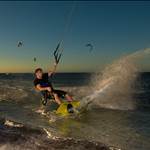
Hola Photographers!
i am crazy about sequence photos..
We are looking for nice sequence shots that you have taken at your local spot!
Lets see what comes up..
Everything is possible- my personal preferences are fully inverted handle pass sequences!
We are just etting into kiting photography (not easy) and would love to learn a little more how to make good shots.
Any tips/tricks for sequence shots and a few nice examples would be highly appreciated!
Peace*
Marve
Buy a camera with a frame fps (frames per second) rate of at least 6. Buy a lense that is long enough to reach the kiters your shooting. Something like a 70-200mm or a 100-400mm is a good starting point. Unless your shooting in good lighting youll need a lense with a fast aperture (f2.8) to get your shutter speed up to avoid motion blur in your images, and help with focusing. Set your camera to al servo mode so your camera continually re-focuses on your subject. It only takes one soft image from a whole sequence to ruin it. Learn the basics of photoshop so you can stitch your images together (youtube). When shooting avoid boring compositions such as the typical 'guy in the sky' shot. Have a point of reference in your image to give it scale so you know how big the trick is. Avoid standard issue 'point and shoot' style angles. Study good photography in kite magazines and see what the pro's are doing. Deconstruct how they've created their shots. Get creative and find an angle that the viewer wouldnt normally see, eg low to the water or up on a ladder. Sequences are overated. Use your creative juices.
Dont forget the flash for those night shots there ruffy! dont know how well a night sequence would work and watch out for lens shadow
dont know how well a night sequence would work and watch out for lens shadow


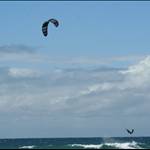
Pics from back in 05/06 when I took more photos than I kited. I think I had a fairly nice Cannon then, but nothing like what can be done these days.
If you can see them sweet.
awesome old school shots Eli!!!
looking good cheers
With any photo the SUBJECT matter comes first, then consider other technical aspects.
Its better to have a technically poor shot of an unusual scenario rather than wait another second and lose the subject matter entirely.
Bad quality shots can add a sense of immediacy to an image, and is often used in movies to portray documentary or action scenes.
Also, use close ups sparingly - its easy to digital zoom in (crop) later, but you cant digitally zoom out later.