I can't ask this question in an audiophile forum bcos it just causes a sh!t storm... audiophiles are usually literate, analytical and very passionate about their imaginary audio nuances.
I completely get balancing between components with AC 60Hz hum... but balanced headphones just seems to be a gimmick to extract money from electronically illiterate people, or crazy audiophiles.
I've ordered some equipment to confirm my suspicions, but I still can't understand how isolating the R/L return path is going to make any difference when the R/L amps share ground.
But I could be wrong, what's your take?
It's a long time since I did HiFi.
By balanced do you mean a 4 wire system instead of a 3 wire system?
Earth return paths are tricky, but mainly at low levels on amp inputs, outputs shouldn't be any big deal. (and here in west aus it's 50hz not 60hz)
If there really is a hum problem, then screened cable is probably going to be the best way to fix it.
R+R-/L+L-/Gnd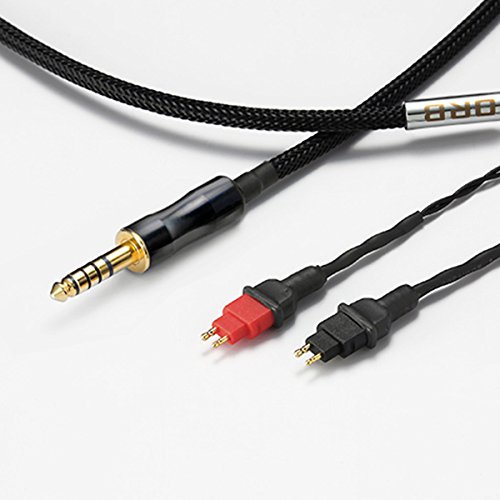
So R+R-/L+L- go to the headphones and Gnd is just an em shield... how is this going to make any difference?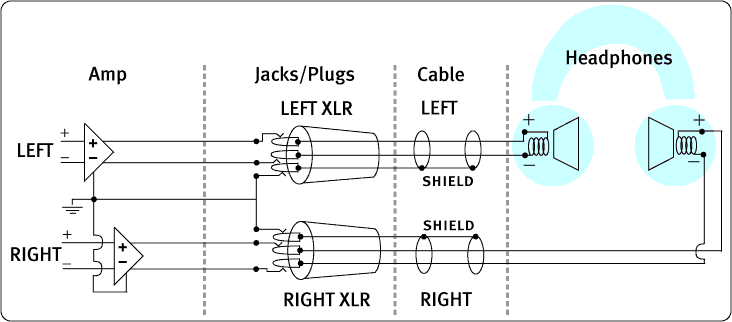
A former colleague who has a solid background in electronics said a copper wire transmit a signal as well as a copper wire transmits a signal.
Anyway I'm off into Bluetooth land and my $80 Aldi Bluetooth noise cancelling headphones sound great.
Most Audiofiles probably are half deaf as by the time you can afford to buy superconductive platinum cables you have worked for 40 years.
Select to expand quoteMobydisc said..
Most Audiofiles probably are half deaf as by the time you can afford to buy superconductive platinum cables you have worked for 40 years.
Old timers who "want" to afford good audio gear usually like those high pitch screechers, the Sennheiser HD800 (worse headphone ever imo), bcos they've lost the ability to hear high frequencies so normal sounding headphones sound too base heavy.
But they sure do have an affinity for super expensive cables... everyone's always waiting for their Kimber Kables to arrive.
Btw everything is great when you have no reference points ;) , and BT audio always sounds limited, even LDAC.
It's not easy getting a single diaphragm to produce 5-25000Hz. D es it m tter f y u d n't s e th wh le pic ure? SD vs HD vs UHD...
One of my work colleagues has spent tens of thousands on high end audio equipment. When he demoed it for me I was not impressed at all.
For some reason he thinks that an equaliser is evil and that you should never distort the natural sound. To me this makes no sense as his speakers aren't going to reproduce the music as well as the live performance anyway. I even have my own two ears to tell me that his system is flat and nothing like a real performance.
He also had power stabilisers that feed 'clean' 240v to the amplifiers.
I don't really know what they do, but given that a traditional amplifier power supply is linear and has a bunch of capacitors to smooth out the power supply, I think his 'stabilisers' are going to have no effect.
Oh well, its as good a way to spend money if you aren't into wind sports.
It is a hobby and I reckon 1/2 of them are just in to it for buying gear. I can't tell difference between cables, files above 24bit (but this could just be mastering vs lower quality files), and this balanced headphone malarky is confounding me, just bcos people are raving about it.
The difference is a manufacturers sound profile; the difference between say my current Marantz (95w per ch) and my previous Yamaha (100w) with the same files/speakers there's a huge difference in sound. Just like headphone to headphone.
Reference speakers/headphones usually sound terrible to me, kind of like a flat color profile in a camera, image looks washed out and bland.
Cable material affecting sound???
I remember one of the electronics magazines doing a test several years ago, and common household TPS scored just as well or better than all the fancy speaker cables.
I know a guy who as spent over $100k on his audio setup, including a special room. The funniest thing is that he really only ever listens to one vinyl audio track which he considers to be a really good 'test' of his system, and just keeps modifying the system to try and make it sound perfect. Poor guy has lost any real enjoyment that comes from listening to music.
Meanwhile, teenagers theses days seem to listen to music streaming out of the speaker on their mobile phones, with seemingly no interest in the (lack of) quality of the sound.
Select to expand quote
So R+R-/L+L- go to the headphones and Gnd is just an em shield... how is this going to make any difference?
I think it's only going to make a difference if your headphone cable is tied to a high voltage transmission line.
Select to expand quoteFlySurfer said..
I can't ask this question in an audiophile forum bcos it just causes a sh!t storm... audiophiles are usually literate, analytical and very passionate about their imaginary audio nuances.
I completely get balancing between components with AC 60Hz hum... but balanced headphones just seems to be a gimmick to extract money from electronically illiterate people, or crazy audiophiles.
I've ordered some equipment to confirm my suspicions, but I still can't understand how isolating the R/L return path is going to make any difference when the R/L amps share ground.
But I could be wrong, what's your take?
It's to do with crosstalk between left and right.
All the current for either channel has to have a return path back to the source ( amplifier).
Any current in the return line, be it from the right channel or left channel, will produce a small voltage drop on the return line.
The longer the cables are, the more the crosstalk will be.
If the shield wire or any other wire is used as the common return for both left and right channel then the voltage drop signal across the return line for one channel will be heard as part of the drive signal in the other channel. By using separate wires for L+& L- and R+& R-, then it completely separates the two channels so no crosstalk between them.
The difference becomes noticeable if the volume is up loud on base notes etc, because base notes require more power, thus higher current, thus higher crosstalk. Thus if there is something loud on one channel and nothing on the other channel then you will hear a soft replica of the loud sound on the soft channel. Even then, the crosstalk signal is quite small but because the ear response is logarithmic, it can be quite apparent to a critical ear. Mine is not critical so I couldn't care less. It's not like interference by static or crackle from a scratchy recording or similar. It just sounds like a very soft but perfectly clear signal from the other channel. However, some people spend a fortune on their gear and study all the figures on this sort of stuff in great detail before buying anything. They then spend thousands on buying something with zero crosstalk only to find they can still hear it because of the headphone cabling. Thus five wire headphone cables.
In the days of the old stereo records, it made no difference because the crosstalk between channels off the LP record or tape recorder head was way more than anything caused by having a common signal return line on the headphones.
With the modern digital stuff, the channel separation can be close to 100% so now the tiny level of crosstalk due to headphone cabling is a significant percentage of the overall performance, even though the total is way lower than it ever was 50 years ago.
Select to expand quotepweedas said..
It's to do with crosstalk between left and right.
All the current for either channel has to have a return path back to the source ( amplifier).
Any current in the return line, be it from the right channel or left channel, will produce a small voltage drop on the return line.
The longer the cables are, the more the crosstalk will be.
Great pweedas, that makes perfect sense.
Select to expand quoteHarrow said..
Meanwhile, teenagers theses days seem to listen to music streaming out of the speaker on their mobile phones, with seemingly no interest in the (lack of) quality of the sound.
Yup. Bluetooth and MP3 on poxy little speakers killed audio like phones killed photography.... 
The latter is improving but I can't believe the audio people are willing to accept now.
Select to expand quotepweedas said..
By using separate wires for L+& L- and R+& R-, then it completely separates the two channels so no crosstalk between them.
This is the best explanation I've read thus far, but, the return signal is going back to the battery or power source, how is it going to jump the circuit and insert itself in to the feed again for a user to hear the crosstalk?
Select to expand quoteFlySurfer said..
This is the best explanation I've read thus far, but, the return signal is going back to the battery or power source, how is it going to jump the circuit and insert itself in to the feed again for a user to hear the crosstalk?
It's the voltage along the common return, it's part of both circuits, so a voltage drop on one circuit is a voltage plus on the other.
So theoretically if the common wire had zero impedance there wouldn't be a problem. A much heavier conductor for the common should improve things, but separate conductors eliminates it.
So is it like the "purported" silver coated copper cables sound brighter bcos silver conducts better and lets high frequencies travel "better", whereas full copper benefits a warmer sound?
I'd need to do a frequency response test to answer that with any confidence. But I suspect the difference in impedance through the audio range, wouldn'y vary enough to make a noticeable difference.
Yes at Radio frequencies it definitely happens, so there may be something to it.
What I don't get is waterproof earphones while kiting....
I saw a guy wearing them yesterday, just why?
You'd have to be pretty special to want to hear your s h i t playlist even while you are out kiting, sucks