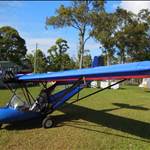
Did you know that Australia has a few private use light aircraft manufacturers (suitable for VH registration and PPL) and that there are many around the world that either modify or make PPL required and "VH" register-able "KITS" specifically for amphibian landing/takeoff private aircraft.
More to the point, if you look at the price of Cessna and Piper e.t.c. they are generally around 300K USD to 500K USD but you can get pretty good kits in Australia and many other countries that do much the same at between 100K and 200K including some amphibian !
Usual price is "around" give or take 100K AUD (80k - 130k AUD) for a kit or factory built light aircraft (land rolling).
One of the greatest recent features since 2013 is manufacture of cheap kits for short take-off landing (STOL) light aircraft that can land and take-off over "no more than 60 meters", a feature worthy of building into amphibians, but with PPL and VH registration you can keep it in a hangar on a small block out of town (obstacles permitting).
Did you know?! You do not need a PPL or RPL(recreational - one of the most useless levels of license possible) license to fly any light aircraft outside controlled air space up to 8000 feet altitude (e.g. official Aerodromes), its draw-back is major airports is 50Km radius and regional are around 25Km radius and there are military bases to not be within particular distance of!
note: That is why in the country areas you sometimes see low flying "full size" light aircraft with no registration markers !
About Australian light aircraft use (PDF document).
windsolarhybridaustralia.x10.mx/PPL-light-aircraft.pdf
Highlighted STOL kit aircraft
Select to expand quoteThinkaBowtit said..
^^ Bloody hell... speechless!
And sooooo fake.
What i'm telling you "is", i've found a huge quantity of "dirt" about Australia and light aircraft, in essence "experimental license light aircraft" kill less than cars but if you knew the statistics and how the stats changed and operate you would fly a 30 year old aircraft in some terms of its risk rather than dirive a road vehicle !
More than that, "national businesses and economics" is crippled by not understanding and not having the comprehension that such aircraft are a huge help at "productivity" by their flexibility of time and use !
However, if any country had a reason for average people to use and own and fly light aircraft personally , Australia may be the list top by environment and isolation distances, AND without excuse of not having a light aircraft industry for average people embedded in its culture as norm (e.g. there is a crime being committed why is this not occurring?!).
At present people seem to have the misconception that A.K.A. "aircraft" used for business or utility purpose belongs to mining companies that fly in food , workers orders and employees e.t.c. BUT the same can be said of personal life of the middle class individuals now from these proven new kit light aircraft 2's and 4's AND "AMPHIBIAN" ALSO !
The seaplane kit (in the video sown in the first post) is touted as around 70K AUD but if you are "married" and have a property "two" PPL's + STOL and night flying accreditation , hangar and the plane and rego-extra-electronic equipment for VH will be just under 150K AUD at best or just under 190K normal with a 4 seat.
Plenty around the 150K AUD final if you own a property with longer than 150 meters clear for a runway (e.g. minimum 5 acres by shape).
Kit Seaplanes have the problem that they need to take off and land on land carefully much longer e.g. 250 meters if they have such an undercarriage for land so they take more like a minimum of 10 acres by shape (aberration).
note: "takeoff distance" is governed by propeller type and horsepower chosen for the kit , not a mere specification.
This following PDF document may have better been labelled ....
"A comprehensive quick FAQ for all you need to know (pros and cons) about building and flying light aircraft as the average wage earner in Australia"
windsolarhybridaustralia.x10.mx/PPL-light-aircraft.pdf
Select to expand quotehowe said..
You could do this for a very low cost.
I only recently found how much change to micro and ultralight law there was over the past 30 years, Ultra is up to 600Kg in Australia and micro is down near 300Kg somewhere.
There are also "microlight" amphibian!
www.airsports.com.au/index.php/flying-lessons
and a term "Nanolight".
windsolarhybridaustralia.x10.mx/PPL-light-aircraft.pdf
why not just get a paraglider with one of those backpack engines?
Select to expand quotemyusernam said..
why not just get a paraglider with one of those backpack engines?
spins me out when i see these guys. they dont even worry about making sure the fuel tank is full
Watched a guy demo something similar at an rural Agg field day a number of years ago. Pre-demo, only a couple of exhibitors around.
Organizer wanted to ensure it was safe. Was a little fluky with a side breeze on his take off area.
Anyway he insisted, it was all good.
Headed off down hill, got up around ten feet, and one of those side gust hit the chute. Turned it 180 degrees.
Went into the deck like a lame duck 

Lucky nothing damaged but ego
Bloke sorted out some stuff, and 2-3 hours later, back for round two with success.
Reckoned if he had some more elevation first take off, he could have recovered, and not hit the deck
Select to expand quotemyusernam said..
why not just get a paraglider with one of those backpack engines?
spins me out when i see these guys. they dont even worry about making sure the fuel tank is full
I'd worry at that altitude that i wasn't hit by an aircraft , get some orange and yellow clothes and maybe a front and rear strobe light !!!
Did you know that in Australia , above 8500 feet is controlled air space (VH registered only) , also within 25 Km of regional airport or 50 Km of major airport !!!
Links and info such as that are contained in the PDF document i put in this thread about cheap developed experimental kit planes .
windsolarhybridaustralia.x10.mx/PPL-light-aircraft.pdf
What do you do to not get involved in a collision ?!?
Australian air space classifications - A,B,C,D,E,F,G
www.airservicesaustralia.com/wp-content/uploads/12-058BKT_Guide-to-our-operations_WEB.pdf
Select to expand quotenicephotog said..
Did you know that in Australia , above 8500 feet is controlled air space (VH registered only) , also within 25 Km of regional airport or 50 Km of major airport !!!
Australian air space classifications - A,B,C,D,E,F,G
www.airservicesaustralia.com/wp-content/uploads/12-058BKT_Guide-to-our-operations_WEB.pdf
Huh? The link you posted explains all about airspace and shows that none of those things are correct?
I'm starting to think that nicephoto has an axe to grind (or perhaps a plane to sell)...
I thought it was 10000 but yeah no matter what you get you can't go above that in Aus. Not that that matters. those fan man's you would need to pick yr weather but would be cool doing a multi day trip with a few blokes up north. Take a travel rod. Stay in outback pubs. Spare t shirt and boardies. I was thinking Cairns across Tablelands to Karumba, burketown , lawn hill NP etc You could land on beaches and fish rivers. Pull up at Roadhouses for lunch? Ride the morning glory cloud thing. I think conditions need to be good tho. I like gyros also - they look cool. Bit safer too I think. Something to take up when you're old and have led a full life and kids are grown so it doesn't matter so much if you have a wipeout
Select to expand quoteDawn Patrol said..nicephotog said..
Did you know that in Australia , above 8500 feet is controlled air space (VH registered only) , also within 25 Km of regional airport or 50 Km of major airport !!!
Australian air space classifications - A,B,C,D,E,F,G
www.airservicesaustralia.com/wp-content/uploads/12-058BKT_Guide-to-our-operations_WEB.pdf
Huh? The link you posted explains all about airspace and shows that none of those things are correct?
EXCUSE ME "DAWN PATROL" !!! WHAT YOU STATED IN YOUR POST IS AN OUTRIGHT LIE !!!!!!!!!!!! (You should remove your post and apologise)
Class "G" airspace is uncontrolled and up to 8500 feet and not near regional or Major airports !!!
Anything above 8500 ft is controlled , However, anything not class G airspace is controlled airspace International or otherwise !!!
READ PAGES 10 and 11
www.airservicesaustralia.com/wp-content/uploads/12-058BKT_Guide-to-our-operations_WEB.pdf
Select to expand quotemyusernam said..
Does it really matter? Higher than u ever need to go in a light aircraft anyway
Actually, the point is i'm right and there is nothing to criticize, what i said is drawn from legislation not my mere whim to remember (although i may not remember some facet well until i look it up).
It is of fact important, uncontrolled airspace can around have anything you want in it but it is finite of boundary!
More than that , ACTUALLY, how light aircraft "exploit speed" IS altitude, it allows the aircraft to go faster because there is less air resistance and avoid terrain of which "Mount Kosciuszko" is 2228 meters high and is 7309 feet , A piece of Australian terrain you would want to avoid !
So does it matter, well if truth does not matter, WTF DOES ?!?!?
Select to expand quotenicephotog said..Dawn Patrol said..nicephotog said..
Did you know that in Australia , above 8500 feet is controlled air space (VH registered only) , also within 25 Km of regional airport or 50 Km of major airport !!!
Australian air space classifications - A,B,C,D,E,F,G
www.airservicesaustralia.com/wp-content/uploads/12-058BKT_Guide-to-our-operations_WEB.pdf
Huh? The link you posted explains all about airspace and shows that none of those things are correct?
EXCUSE ME "DAWN PATROL" !!! WHAT YOU STATED IN YOUR POST IS AN OUTRIGHT LIE !!!!!!!!!!!! (You should remove your post and apologise)
Class "G" airspace is uncontrolled and up to 8500 feet and not near regional or Major airports !!!
Anything above 8500 ft is controlled , However, anything not class G airspace is controlled airspace International or otherwise !!!
READ PAGES 10 and 11
www.airservicesaustralia.com/wp-content/uploads/12-058BKT_Guide-to-our-operations_WEB.pdf
Before you shout down anyone, you might want to be a little more sure yourself otherwise you just look like an ignorant fool.
The height of class G airspace can be as high as 18,000 feet. Usually above class G is class E airspace. Class E airspace for your little VFR lightly is NOT controlled nor do you need a clearance to enter. IFR aircraft DO need a clearance to enter class E and are given traffic on other IFR and known VFR aircraft, but is still not considered controlled airspace. Above that you have A, and C and D controlled airspace are usually associated with controlled aerodromes.
You are right mate, I did not read your website link. I didnt need to. But I did go back and read the link to the airsevices website. That is a very generic picture to explain airspace steps. But they are not set in stone like that.
Here is a screen shot of an actual map with the airspace 75 Nm south of Karratha. You will be able to see that G is up to 18,000' with E being from 18'000 to the 24,500 feet.
I don't k ow what you are trying to peddle here, but factual information is not it.

Select to expand quotenicephotog said..Dawn Patrol said..nicephotog said..
Did you know that in Australia , above 8500 feet is controlled air space (VH registered only) , also within 25 Km of regional airport or 50 Km of major airport !!!
Australian air space classifications - A,B,C,D,E,F,G
www.airservicesaustralia.com/wp-content/uploads/12-058BKT_Guide-to-our-operations_WEB.pdf
Huh? The link you posted explains all about airspace and shows that none of those things are correct?
EXCUSE ME "DAWN PATROL" !!! WHAT YOU STATED IN YOUR POST IS AN OUTRIGHT LIE !!!!!!!!!!!! (You should remove your post and apologise)
Class "G" airspace is uncontrolled and up to 8500 feet and not near regional or Major airports !!!
Anything above 8500 ft is controlled , However, anything not class G airspace is controlled airspace International or otherwise !!!
READ PAGES 10 and 11
www.airservicesaustralia.com/wp-content/uploads/12-058BKT_Guide-to-our-operations_WEB.pdf
Lol, no it wasn't. You just don't understand airspace, which is fine. If you read your Airservices pdf it explains it all in very plain English. Your lack of knowledge on the topic does not make me a liar.
QUOTE "Toph" ..."Here is a screen shot of an actual map with the airspace 75 Nm south of Karratha. You will be able to see that G is up to 18,000' with E being from 18'000 to the 24,500 feet.
I don't k ow what you are trying to peddle here, but factual information is not it."...
Class G airspace for the purpose of those wishing to understand airspace at this time may as well be up to 8500 ft with particular considerations as explained by the 2017 Air Services Australia Diagram !!! It does not matter for people learning of an issue a flying FK what complicates what class G air space may ever be so "Toph" stop being a rude SB and STFU !!!
As for ..."a very generic picture of air space"... , those whom do not know of and do not have understanding the value of a PPL and light aircraft to manage business or life-style need not care much beyond the Air services Australia diagram !
Second and more importantly , DO NOT CALL ME A PEDDLER i'm not here to sell it just alike anyone else talks about land yachts , SUPs e.t.c. their brand name and price to help understand the significance of a product by parity and feature, whom mentions a price.
QUOTE "Dawn Patrol" ..."If you read your Airservices pdf"...
The Air services document states :
Up to 18,000 feet is controlled air space surrounding Major airports for around up to 90Km.
I cannot find an explanation for your rubbish and criticism and false founded rebukes perhaps a forum Administrator can look over your post to help you gain some coherence of whether you have any cause to distract , hinder and derogate the thread (or maybe the police)!
It is perfectly simple ,
Controlled air space is where a radar operator and air traffic controller is responsible for charting courses "for" flights (VH registered with their own unique bit coded transponder) of which above 8500 feet are regional and International high speed , high powered aircraft "cruising" at anything from 400Kmh to 800 Kmh .
If something enters that air space , unless it is under total control of the air traffic controllers then these passenger and freight aircraft are in massive danger !!!!
Light aircraft are too slow and not maneuverable at light aircraft cruise speed , so CANNOT be above 8500 feet without VH registration transponder and PPL holder and competent pilot .PERIOD.
Basic PPL is VFR (Visual Flying Rules first licensed standard PPL level) , add on to PPL is a second accreditation called IFR Instrument Flying Rules (e.g. combination of auto-piloting and navigator assisted in any type of aircraft - various strategies but using the instruments and meteorology info to guide the aircraft without visual ability!), IFR is usually in combination with VNF Visual Night Flying accreditation!
Uncontrolled air space is where para-gliders , ultralights , unregistered light aircraft , powered parachute flyers., microlight e.t.c can fly because Uncontrolled air space is below (segregated beside) the air space used , needed and "legislatively segregated" for the dangers of high speed high powered aircraft flight to prevent collision from destructive or impossible avoidance maneuver speed (light aircraft must first slow down well below cruise speed to turn see look up: VNE - Never Exceed speed) AND requires PPL and VH registration to be present in it (controlled air space) (or special registered foreign aircraft e.g. jet Airliner) !
Like i said ..."It is perfectly simple"... see if you can pick the point in the following 1 hour and 20 minute documentary video !
Nice mate. Just nice. I won't argue with you here. You obviously know better. My bad..
you do not need a PPL to fly in controlled airspace or at a controlled aerodrome, you can do that with an RPL.
www.casa.gov.au/standard-page/getting-your-recreational-pilot-licence-rpl
In with Toph on this. Pretty much nothing you have written is correct, but if you're happy with that I don't really care.
I am a little bit curious as to where/how/why you came up with this info, although I suspect that is opening a whole new can of worms...
Maybe Laurie can get a new web site to discuss air sports and the apparent debacle that is the current level of knowledge amongst water sports enthusiasts surrounding what you can and can't do at various heights above sea level.
Select to expand quotefjdoug said..
you do not need a PPL to fly in controlled airspace or at a controlled aerodrome, you can do that with an RPL.
www.casa.gov.au/standard-page/getting-your-recreational-pilot-licence-rpl
RPL is around the most useless license ever created by government !
I t is the genuine "BLOWFLY" of licenses ever created. by a government in any sector
When you apply to learn for either a PPL or RPL you get a special training student pilot license after passing your class 2 medical examination and all the Recreational license allows is either a partial completion of prior learning for PPL or you only fly around in circles (A.K.A.) up to 50 miles from the aerodrome you took off AND can only land at the aerodrome you took off from (legally) , RPL activity is carried out in controlled air space !
You can do more unlicensed in uncontrolled air space including using and amphibian.
With any form of pilot license amphibian is a special post completion and number of hours logged acceptance to learn and accreditation.
PPL and RPL are both piston single and, RPL has some passenger and weight restriction i think.
You really would be sensible for the price too to only do an RPL for broken period learning(doing the last of a PPL later and when you know your handling the aircraft and knowledge of procedures matches the book so you can pass practical exam confident) on costs, it costs at least if not more than half the cost of novice PPL accreditation.
Average RPL costs 10K and the whole PPL dependant where you go to cost somewhere around 15 -20 - 25k (landing - take-off fees (location) and insurance govern the cost in many flying schools) !
However, if you throw your (ultralight - think this is as much as you can have up to 600Kg with rec. license) Rec. aircraft on the back of a truck and take it out to Uncontrolled air space you can do what you want in it , same with a VH if you have no license (ALTHOUGH there will be equipment inside you will not be allowed to operate of switch on !!! e.g. Air Band two-way national legislated air spectrum , individual VH transponder ?beacons and other chewys).
(AFAIK they are no smoking by law )
(@fjdoug) ...But nice one (like) if you read it , particularly with PPL and freedom in mind...
PPL is not restricted to piston engine single.
You can fly a Boeing 747 with a PPL if you had a 747 endorsement, only for private/non commercial flights though.
You couldn't be paid to fly it and you would not be able to charge your passengers though they could contribute to cost sharing.