Lighthouse to Leighton Kiteboarding Event - Equipment Choice


Ride from the Lighthouse, to Leighton. Do not pass Go...
With such a unique race, the boards could end up getting quite specific, but seeing it's only once a year, racers are turning to production boards that fit the bill. But what are the options?
There's great debate about whether or not using a twintip is the best way forward, but generally accepted that if you're racing to win the race, then you'll need a directional board. But then, which kind of directional board?
First, the benefits and disadvantages of a twintip.
Twintips are great for jumping, they're also great for riding fast toeside. That's about it, in the swell and chop it's pretty easy to catch an edge, and have you ever tried riding fast downwind for any length of time on a twintip? Your back leg gets pretty sore after a while. On the plus side, if one leg gets sore, you can very quickly pop over to toeside and continue almost as fast. And if you get bored, well, there's some pretty big ramps out there.
But! As history dictates, if you want to go really fast downwind in chop, you need a directional board. Not only are the bigger (read: less power hungry), the nose means you'll punch up over the waves and not find yourself mid air, looking backwards at your board while you think about how many sharks there are in the water. You also want a big kite considering the fact you're racing.
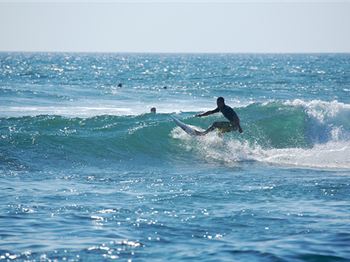
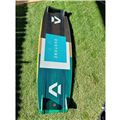
So, option one. The surfboard. Yep, it'll work and it could be fast. The benefits of a surfboard over the other directionals is that they're easy to ride. Make sure you've got straps, don't kid yourself here. Nobody thinks strapless is cool when you're racing, so whack a set of plugs in if you don't have them already. And if you're looking at buying a surfboard for the occasion, keep an eye out for something with a flat rocker in the tail.
Option two. A full on course racing board. You can guarantee they'll be there this year, with racing getting so popular in Australia more people have these boards than ever. But will they be the best choice? That's up to the conditions to decide, because if it's light (sub 20knots) then the flatter water and big fins on the race boards will mean they're super quick. Those riders accustomed to muscling them around a course won't have any trouble loading up the fins for one tack either, so look out for them.
And option three. The proven winner on several occasions. The Slalom, or 'Freerace' board. These boards are not quite a course board, not quite a surfboard. We're talking about boards like the Cabrinha Transport and Airush Sector. With flat rockerlines, small(ish) fins and outlines that favour being 'easy' to ride. They have basically everything going for them, and not much against. Last year the fastest rider was on a Cabrinha Transport, which was a solid minute ahead of the rest of the pack, and it's pretty easy to see why! The Transport is a dedicated reaching board, with two big fins in the back and a centre mounted footstrap it's the perfect combination for a race such as this.
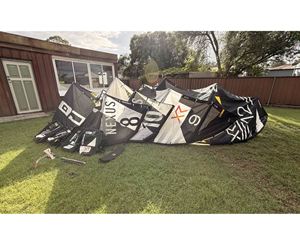
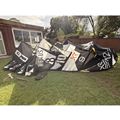
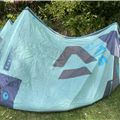
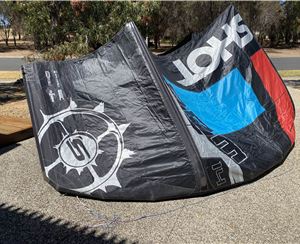
But what about the kites? That's easy. Go big, and make sure you don't crash it. Everything from Cabrinha Switchblades to North Rebels have featured in the top 10 so whatever you've got, bring it along!
Apart from the equipment, you yourself as a rider need to be fit and ready to handle one solid run on your back foot. Train by doing squats and lunges, but don't stress too much! The adrenalin gets pumping and it's over before you know it.
Just don't break the start line!
Learn the sequence and make sure you stay upwind of the pack.
Good luck!
 Torquay, VIC