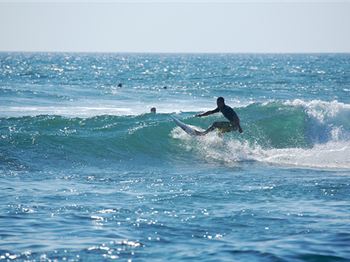
Kitesurfing Safety Essentials

 Staying safe at the beach - Kite Safety Essentials
Who would have thought 50 years ago that kitesurfing would actually work. Had anyone tried it, imagined it, hey: had anyone even dreamt it?! Probably no to all three...
So, we're a lucky bunch aren't we? At the forefront of a new sport - how many other people can say they were the genuine pioneers of a sport; that they were there within the first fifteen years of a sport being invented? That they had a Wipika Freeair?!
Anyone who has been kiting for the last 5-10 years or so can count themselves amongst that number, and will have something to tell the grandkids about when the sport is more established, and a more mainstream activity. And the fact is that kiting is only going to get more popular - as it should - it's a great sport and we shouldn't be selfish about sharing it.
Busier beaches
Although Australia is one of (or 'the'?) best country in the world to be a kiter (in terms of beaches and breeze), and despite the fact that Australia probably has more miles of empty beach per kiter than any other kiting country: there will always be popular spots and crowds and they are only going to get busier... We can't all have our private beaches or weekend hideaways - some of us have to sneak in for a cheeky hour or so at the end of the working day, some of us have to take the kids to footie in the afternoon and - rumour has it - some of us like kiting with other people! So ... there are always going to be crowds.
Staying safe
As the number of kitersurfers at the beach increases, everyone has to take responsibility for making sure that things stays safe (and chilled out!) on the beach and in the water. The fact is that kiting can be dangerous, and that incidents at the beach lead to problems with the authorities, and bans or restrictions that can take some of the fun out of our sport.
Kitersurfers are, in the main, a fairly conscientious bunch and good at self regulation (and many kiting communities now enforce very effective self-imposed rules at their beaches), and this is the best way of managing our sport if possible. It is, however, up to every kitesurfer to take responsibility for the safe development of the sport, and to do everything that they can to avoid causing problems - and to make sure they don't get hurt!
Have a read through and help to keep your beach a safe and great place to visit for years to come.
Kite Safety Essentials
General
. Pass other kiters 'port to port'. Or if you have trouble with your reds and greens: Drive on the right. We've got an entire article on Right Of Way rules article.
. Look over your shoulder before your turn around or jump. Check that there is no-one behind you, and think about what will happen if you don't land it..?
. Give other people space. Don't ride too close to other people - if you do find yourself right behind someone then slow down for a bit, or turn around.
. Don't rig up where there are kite schools operating. If you're new to a beach then work out where the kite schools are set-up and give them some space.
. Land your kite quickly. If you leave your kite in the air, then you're putting yourself at risk and making it difficult for other people to get to and from the water.
. Stay in deep water. This depends on the beach but - especially if there are swimmers or people body-dragging - stay at least 50m from the shore line.
. Join the queue. At busy beaches where there is clearly a good spot to practice moves (flat water behind a groyne for example), there is generally a clear circuit of kiters waiting their turn. If you've just arrived then wait for everyone else to have their go, then slot in to the circuit and wait your turn.
. Find some space. If you're on a big beach, then think about taking a 5 minute hike and finding yourself some peace and quiet.
. Get a launch. If it's practical then get someone else to launch your kite. Although self launching is pretty straightforward nowadays, having someone else launch is safer and means that you can check your lines and depower setting.
 If you're just starting out:
. Kitesurfing lessons - get them Kiting is complicated & dangerous. For your first few sessions - you must go with a kite school. It can save your life. One of the reasons for the popularity of the sport is its steep learning curve (you will be up and riding in a few sessions), but for those first few: learn from experts in a safe environment.
. Use a recognised school. Ask around and find the best school in your area. Give them a call and find out what they do to ensure that you learn safely. Check they use special kites for learning (preferably with short lines). Do they have a designated area? Are they registered with the local council?
. The right kite. When you buy your first kites, choose more forgiving models. A good kite will see you through your first few months (and often beyond), make sure it has a good safety system and good depower. Check out the Gear Reviews, or ask in the kitesurfing forums for peoples recommendations. Browse the Kitesurfing Buy & Sell.
. Talk to other people at the beach, or in the forums. Ask other people what the deal is. Kiters are a friendly bunch and like to help out and ensure that people learn to kite safely. Find a local and ask them about the safest area for learning on the beach, and about tides or any by-laws that you need to be aware of. Trust us: no question is too stupid when you're starting out.
. Find some space. If you're body-dragging or not quite staying upwind yet, then choose a quiet beach, or a quieter part of a busy kiting beach. It makes life very difficult for more experienced kiters if you are on a different tangent to them or behaving unpredictably.
. Know your limits. If it's too windy or you don't have the right size kite then give it a miss. If you're not sure how windy it is, then ask other kiters what they are putting up. Until you're confident with your skills: you can never be 'too cautious'.
Further reading...
Kitesurfer Beginner Questions
Kiting Safe Guidelines
Kitesurfing Terminology & Lingo
www.seabreeze.com.au/Articles/Kitesurfing/How-to-go-upwind-on-your-kiteboard_3214258.aspx'>How to go upwind on your kiteboard
Winter Weather Warning for new Kitesurfers
Handy Resources:
All kiteboarding Articles
Latest Kitesurfing News
Australian Kitesurfing Forums (including state association forums)
Trade / Buy & Sell Kiteboarding Equipment
Kiteboarding Photos / Gallery
 Kogarah, NSW